
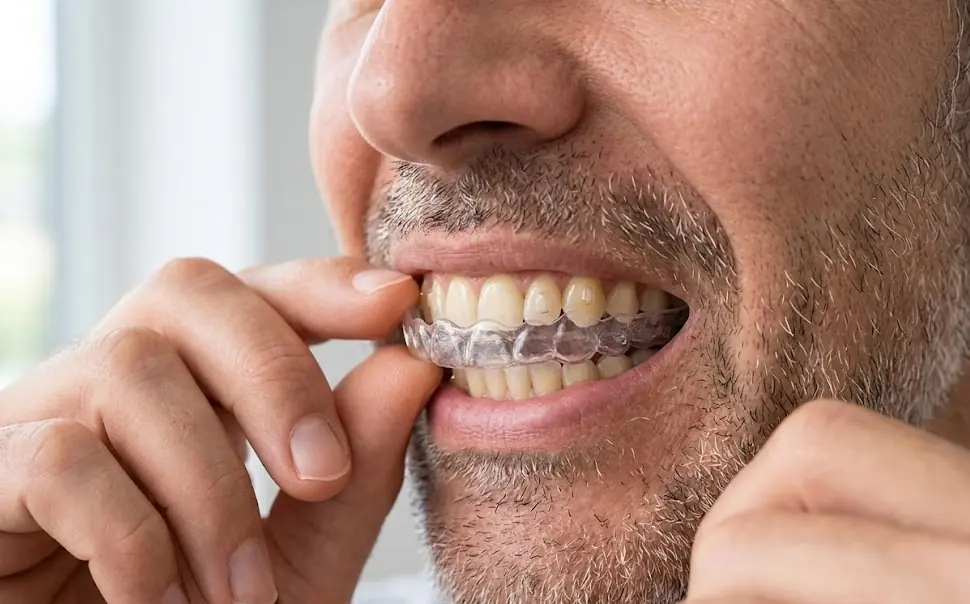
Starting Invisalign is one of the more straightforward orthodontic journeys available today — but “straightforward” doesn’t mean effortless. How you maintain your aligners between appointments determines two things: whether they stay invisible, and whether your teeth actually move on schedule.
The technical term for teeth falling behind the plan is System Lag. It happens more often than most patients expect, it extends treatment time, and it’s almost entirely preventable. Staining — the other major complaint — is equally preventable once you understand exactly what causes it and what doesn’t.
This guide covers both, from the daily cleaning steps that keep aligners clear to the tracking techniques that keep your treatment on time.
What’s in this guide
- Wear time: the 22-hour rule and why it matters
- Cleaning your aligners: what works and what quietly destroys them
- System Lag: what it is, how to spot it, how to fix it
- What you can eat and drink while in treatment
- Storage and protection
- FAQ: 12 common questions answered
1. Wear Time: The 22-Hour Rule
Every Invisalign treatment plan is built around a biological assumption: that your aligners will be in your mouth for 20 to 22 hours every day. According to the American Association of Orthodontists (AAO) guidelines, wear time compliance is the single most critical variable in whether clear aligner therapy succeeds.
Here’s the biology. Tooth movement happens when sustained, consistent pressure is applied to the periodontal ligament — the soft tissue connecting your tooth roots to the jawbone. Your aligners deliver that pressure precisely, in exactly the direction the treatment plan specifies. When the aligner comes out, that pressure stops. When it stays out long enough, the tooth begins drifting back. Even small amounts of drift create a gap between the tooth surface and the inside of the aligner — and a gap means the aligner is no longer delivering pressure where it should. That’s System Lag.
The Rule of Threes: If you remove your aligners for breakfast, lunch, and dinner, you have roughly 30 to 40 minutes per meal for eating, brushing, flossing, and reinsertion. That’s the math at 22 hours of wear. Plan accordingly — lingering over coffee with your aligners out for 90 minutes eats directly into your tooth movement time.
The practical implication: build reinsertion into your after-meal habit immediately. Eat, brush, floss, reinsert. Not eat, brush, check your phone for an hour, remember to reinsert. The difference between 20 hours and 17 hours of daily wear compounds dramatically over weeks of treatment.
2. Cleaning Your Aligners: What Works, What Doesn’t
Clear aligners are made from a medical-grade thermoplastic that’s highly precise in its fit — and surprisingly vulnerable to the wrong cleaning habits. The same properties that make it mold perfectly to your teeth make it absorb pigments, warp under heat, and scratch under abrasion. Most cleaning mistakes fall into one of these three categories.
Hot water — the invisible wrecker
Rinsing aligners under hot tap water is one of the most common and consequential mistakes patients make. The thermoplastic begins to deform at temperatures well below what most people consider “hot.” Even a 30-second rinse under hot water can subtly alter the shape of the tray — a change your eye won’t catch but your teeth will. A distorted aligner no longer fits with the precision the treatment requires. Always use cool or lukewarm water.
Toothpaste — it seems logical, but don’t
Toothpaste feels like the natural choice for cleaning something in your mouth. It’s a mistake. Even “gentle” formulas contain abrasive particles — they’re what makes toothpaste effective at cleaning enamel. Those same particles scratch the aligner surface microscopically. The scratches aren’t visible to the naked eye initially, but they create grooves that harbor bacteria and trap pigment. Within a few weeks, aligners cleaned with toothpaste look significantly more cloudy and yellowed than those cleaned properly.
The daily cleaning protocol
- Rinse immediately on removal. Every time you take the aligners out, rinse them under cool water before setting them down. This removes fresh saliva and plaque before it dries and adheres. Dried biofilm is much harder to remove than fresh, and it’s the primary source of odor.
- Brush gently, once daily. Use a soft-bristled toothbrush and a small amount of clear, unscented liquid dish soap. Brush all surfaces — inner and outer — lightly. Don’t scrub. Rinse thoroughly with cool water after.
- Soak once daily. Use specialized aligner cleaning crystals (Invisalign’s own brand, or equivalent), Retainer Brite tablets, or a diluted white vinegar solution (one part vinegar to three parts cool water, 15–20 minutes). This deep-cleans the plastic and kills odor-causing bacteria. Do not use standard denture tablets — many contain persulfate compounds that can irritate oral tissue.
- Rinse before reinsertion. After soaking, rinse thoroughly with cool water before putting the aligners back in.
Never use mouthwash to soak your aligners. Most mouthwashes — including popular clear varieties — contain dyes, alcohol, or both. Dyes stain the plastic directly. Alcohol can degrade the material over time. If you want the antibacterial benefit of a soak, use cleaning crystals or the diluted vinegar solution instead.
The staining culprits — a practical list
Your aligners pick up pigment from two sources: what you drink while wearing them, and what remains in your mouth when you reinsert them after eating. The second source is underestimated. If you eat turmeric curry, rinse your mouth but skip brushing and flossing, and put your aligners back in — the residue in the grooves of your teeth and gum tissue transfers immediately to the plastic.
High-stain foods and drinks
- Coffee and tea (tannins penetrate plastic quickly)
- Red wine
- Turmeric and curry
- Tomato-based sauces
- Berries (blueberries, blackberries, pomegranate)
- Soy sauce and balsamic vinegar
- Colored sports drinks and juices
After eating these: do all three
- Rinse your mouth thoroughly with water
- Brush all tooth surfaces
- Floss — residue in contact points transfers to aligners
Even then, highly pigmented foods leave residue. With heavy stainers, consider rinsing your aligners with cool water before reinsertion as an extra step.
3. System Lag: What It Is, How to Spot It, How to Fix It
System Lag is the clinical term for what happens when your teeth fall behind the movement schedule programmed into your aligners. Each tray in your set is designed to move your teeth a fraction of a millimeter in a specific direction. If a tooth doesn’t reach the position the current tray specifies before you move to the next tray, the cumulative gap between where your teeth are and where the plan says they should be grows with every tray change.
Left uncorrected, System Lag eventually makes it impossible to seat the aligner properly, at which point refinement trays — a new set designed to get your teeth back on track — become necessary. Refinement extends treatment by weeks to months and adds cost. It’s an avoidable outcome for the majority of patients.
How to spot System Lag early
The earliest sign is a visible air gap between the edge of a tooth and the inner surface of the aligner. Check the posterior (back) teeth especially — this is where lag tends to develop first, because molars and premolars are larger and harder to move than front teeth.
Run your fingernail gently along the edge of a seated aligner. If you feel the edge of the tray lifting away from any tooth, that’s the beginning of lag. Caught early, it’s easily corrected. Left for a week or two, it compounds.
The chewie technique — how to use it correctly
Invisalign Chewies are small, cylinder-shaped silicone cushions your provider gives you at the start of treatment. Here’s how to use them effectively:
- After reinserting your aligners, work through your entire arch — start at the back molars on one side.
- Bite down firmly on the chewie for 5–10 bites at each tooth position, then move forward.
- Work across the arch and do the same on the other side.
- Total time: about 5 to 10 minutes per session.
- Do this at least once daily, ideally after your morning reinsertion and again before bed.
The chewie’s purpose is to eliminate the small air gaps that naturally form when you first seat a new tray. By biting down, you’re generating the pressure that pushes the aligner flush against each tooth surface — ensuring force is applied where the plan specifies, not hovering slightly above.
If a gap doesn’t close within two days of consistent chewie use and full wear time, contact O2 Dental Group. Early intervention — either backtracking to a previous tray or scheduling a progress check — prevents minor lag from becoming a treatment-extending problem. Don’t wait until your next scheduled appointment.
The most common causes of System Lag
- Wear time below 20 hours per day (the most common cause)
- Moving to the next tray before teeth have fully tracked in the current one
- Distorted or warped aligners from hot water or improper storage
- Missing chewie use when transitioning to a new tray
- A tray that cracked or developed a stress fracture — reducing the force it can apply
4. Food, Drink, and Your Aligners
The rule is simple and without exception: remove your aligners before eating or drinking anything other than plain, cool water. Nothing else. Not coffee with the aligners pushed to the side. Not “just a sip” of juice. Not a small piece of food eaten carefully.
Here’s why the rule is absolute.
The heat problem
Hot coffee, tea, or soup served at typical temperatures is well above the threshold at which thermoplastic begins to subtly deform. You may not notice the change immediately — but even repeated minor thermal stress degrades the precision of the fit over time.
The acid problem
Acidic drinks — sodas, sparkling water, citrus juice, wine — become significantly more damaging when they’re trapped against your teeth by a sealed aligner. Saliva’s natural buffering capacity, which normally reduces acid exposure time significantly, is mostly cut off under the tray. The result is sustained acid contact with enamel for as long as the aligner is in. White spot lesions (early-stage demineralization) are a known complication of clear aligner therapy for patients who drink acidic beverages while wearing trays.
The sugar problem
Sugar trapped under an aligner creates an ideal environment for Streptococcus mutans — the primary bacteria responsible for dental decay. Without normal saliva flow to dilute and clear it, sugar concentration under the tray remains elevated for the entire period the aligner is in. This is why Invisalign patients who drink sweetened beverages while wearing aligners have substantially higher rates of new decay during treatment.
| Drink | Aligners in: OK? | Why |
| Plain cool water | Yes | No pigment, no acid, no sugar |
| Sparkling water (plain) | Remove first | Carbonic acid — low risk but cumulative |
| Coffee / tea | Remove first | Heat distortion + immediate staining |
| Any juice | Remove first | Sugar + acid trapped against enamel |
| Soda / diet soda | Remove first | High acid, sugar or artificial sweeteners that still lower pH |
| Sports drinks | Remove first | Sugar + acid + pigment |
| Wine / beer / spirits | Remove first | Acid + pigment + alcohol degrades plastic |
5. Storage and Protection
Lost and damaged aligners are the third major cause of treatment delays, after System Lag and poor compliance. Replacement trays take time to fabricate and ship — during which your teeth may drift, requiring additional correction. Protecting your aligners when they’re out of your mouth is as important as caring for them when they’re in.
The napkin problem
Wrapping aligners in a paper napkin at a restaurant or on a work call is the single most common way they end up in the trash. The solution is behavioral: the aligner goes directly from your mouth into the case, never onto the table, never into a pocket, never wrapped in anything disposable. There are no exceptions that don’t eventually result in a lost aligner.
The two-case system
Keep the original case at home and purchase a second identical case for your bag, car, or desk. When you always have a case within reach, the case-first habit becomes frictionless. When you’re searching for a case at a restaurant, the napkin becomes tempting.
The pet hazard — genuinely common
Dogs are strongly attracted to the scent of human saliva on aligners and will chew them immediately if given access. Aligners left on a nightstand, bathroom counter, or coffee table are accessible to most dogs. Always close the case completely — even if you’re only setting it down for a minute.
If your aligner cracks, fractures, or develops a sharp edge, contact O2 Dental Group before wearing it again. A cracked tray can’t apply forces correctly, contributing to System Lag. Wearing a tray with a sharp edge risks cutting soft tissue. When in doubt, call us.
What to do if you lose or damage an aligner
- Call O2 Dental Group immediately — don’t wait for your next scheduled visit.
- Based on where you are in treatment, we’ll advise one of three options: wear your previous tray, move to the next tray early, or order a replacement.
- Never make this decision independently. The right call depends on how long you’ve been in the current tray and how well your teeth are tracking — information only your provider can assess.
Aligners not fitting right? Notice a gap between your tray and a tooth?
Don’t wait for your next scheduled appointment — early correction keeps your treatment on track.
Schedule a Progress Check or call (888) 617-5492
Frequently Asked Questions
Can I use mouthwash to clean my Invisalign aligners?
No. Most mouthwashes — including many “clear” varieties — contain dyes (blue, green, red) that stain the aligner plastic directly, and alcohol that can degrade the material over time. Use specialized aligner cleaning crystals, Retainer Brite tablets, or a diluted clear dish soap solution instead. If you want antibacterial cleaning without crystals, a short soak in a diluted white vinegar solution (one part vinegar to three parts cool water, 15–20 minutes) is an effective alternative.
What exactly is System Lag?
System Lag occurs when your teeth fall behind the movement schedule programmed into your aligner trays. You may see a visible air gap between the edge of the tray and the surface of a tooth — this means the aligner is no longer applying force where it should. Left uncorrected, lag compounds with each tray change and eventually requires refinement trays, extending treatment by weeks to months. It’s almost always caused by insufficient wear time (under 20 hours per day) or damaged trays. Consistent chewie use when transitioning trays helps prevent it.
How do I fix tracking problems?
Bite down on Invisalign Chewies for 5–10 minutes daily, working through your full arch from the back molars forward. This seats the aligner flush against each tooth so pressure is applied exactly where the treatment plan intended. Do this after inserting a new tray and daily throughout the tray change period. If a gap persists for more than two days of consistent chewie use and full wear time, contact O2 Dental Group for a progress check. Early intervention is far less disruptive than refinement trays later.
Why are my aligners turning yellow?
Yellow or cloudy aligners result from one or more of four causes: drinking colored beverages while wearing them; rinsing in hot water, which opens plastic pores to pigment; using toothpaste, which scratches the surface microscopically creating pigment traps; or not cleaning them daily, allowing biofilm to stain from the inside. Switch to cool-water rinses, a soft brush with clear liquid soap, and daily soaking with cleaning crystals. The discoloration won’t reverse, but new trays will start clear if habits improve.
What can I drink while wearing my aligners?
Only plain, cool water. Coffee, tea, juice, soda, sparkling water, sports drinks, wine, and alcohol should all be consumed with aligners removed. Even drinks that appear clear or low-risk — sparkling water, white wine, herbal tea — are either acidic, warm, or both. Remove your aligners, enjoy your drink, brush and floss, and reinsert. Never drink and reinsert without brushing first.
What happens if I lose an Invisalign tray?
Contact O2 Dental Group immediately — do not wait until your next appointment. Depending on how long you’ve been in the current tray and how well your teeth are tracking, we may advise wearing your previous tray temporarily, moving to the next tray early, or ordering a replacement. Never make this call independently — the right answer depends on where your teeth actually are relative to where the plan says they should be, which requires professional assessment.
Why do my aligners smell bad?
Odor comes from biofilm — dried saliva and bacteria on the plastic surface. If your aligners smell, the cleaning routine isn’t thorough enough. Rinse immediately every time you remove them (before they dry), brush with clear soap nightly, and soak in cleaning crystals once daily. If odor persists despite this routine, the plastic may have accumulated enough scratches (often from toothpaste use) to harbor bacteria regardless — which typically means the current set of trays is near the end of its useful life.
Can I chew gum with aligners in?
No. Gum adheres to the aligner material and can distort the tray’s shape, compromising the precision fit that makes the treatment effective. Remove your aligners to chew gum, then brush before reinserting.
Do I need to floss every time I eat?
Yes, ideally. Aligners create a sealed environment around your teeth — food particles and bacteria trapped under the tray won’t be cleared by saliva the way they normally are. This significantly accelerates decay and gum inflammation. Flossing after every meal while in Invisalign treatment is one of the highest-impact hygiene habits you can develop. If you genuinely can’t floss mid-day, at minimum rinse thoroughly and brush before reinserting.
How many hours per day do I need to wear Invisalign?
20 to 22 hours per day, every day. This is not a guideline with flexibility — it’s the biological threshold required for continuous tooth movement. The 2 to 4 hours remaining are for meals and oral hygiene. Consistently wearing aligners for fewer than 20 hours per day is the leading cause of System Lag and extended treatment timelines.
Can I use toothpaste to clean my aligners?
No. Toothpaste — even “gentle” varieties — contains abrasive particles that scratch the clear plastic microscopically. Those scratches trap bacteria and pigment, making aligners look cloudy and yellowed faster. Use clear, unscented liquid dish soap and a soft-bristled brush instead.
How should I store my aligners when they’re not in my mouth?
Always use the hard-sided case. Never wrap them in a napkin or tissue — this is the most common way aligners are accidentally discarded. Keep one case at home and a second in your bag or car so you always have one within reach. Keep the case closed and out of reach of pets — dogs are strongly attracted to the scent of saliva on aligners and will chew them immediately if given access.
The Bottom Line
Invisalign treatment is more forgiving than fixed braces in some ways — but patient maintenance determines far more of the outcome than most people realize going in. The technology is precise. The biological process is reliable. What it requires from you is consistency: 20 to 22 hours of daily wear, a daily cleaning routine that doesn’t include toothpaste or hot water, nothing in your mouth while wearing the trays except cool water, and a case within reach every time you remove them.
Slip on any of those for a week, and you’ll likely still be fine. Slip consistently across multiple weeks, and you’ll start to see System Lag or staining — and you’ll have a longer road back to the finish line than if you’d stayed the course.
If you have questions about your current fit, want to know whether your aligners are tracking correctly, or need cleaning supplies — schedule a progress check with O2 Dental Group. That’s exactly what those appointments are for.
Have questions about your Invisalign treatment? Ready to start?
O2 Dental Group offers Invisalign at all six NC locations — Durham, Raleigh, Fayetteville, Wilmington, Siler City, and Southern Pines.
Related Articles & Pages
- Invisalign in Siler City, NC
- Invisalign — Siler City
- Invisalign in Southern Pines, NC
- More from the O2 Dental Group Blog
- Financing & Insurance Options
- Request an Appointment
 English