
Porcelain Veneers in Durham, NC
Porcelain Veneers in Durham, NC — Conservative Smile Design Near Southpoint
If stains run deeper than whitening can fix or small imperfections keep affecting your smile, porcelain veneers can provide a more complete solution. Crafted from durable, dental-grade porcelain, these custom shells are permanently bonded to the front of your teeth to enhance appearance, correct minor alignment concerns, and create long-lasting cosmetic improvements that stand the test of time. For most adult cosmetic patients, they’re the most transformative single decision available in dentistry.
At O2 Dental Group of Durham on Watkins Road near Southpoint, veneer cases get the time and planning they deserve. Every case is custom-designed for your face, your existing teeth, your skin tone, and the result you actually want — not the uniform bright-Hollywood-white that announces itself in every photo. The Durham patient population tends to notice over-done cosmetic dentistry from across the room, and our standard is the opposite of that: same shade family as your adjacent teeth, varied shape across the smile line, real translucency at the edges. Veneers should look like the best version of your own teeth.
This guide explains how porcelain veneers can enhance your smile, who benefits most from treatment, and how they compare with Lumineers. You’ll also learn what happens during each stage of the procedure, our minimally invasive preparation philosophy, how to care for your veneers for lasting results, and the factors that influence treatment costs in our area.
Veneers
Learn how porcelain veneers can improve the appearance of chipped, stained, worn, or uneven teeth to create a natural-looking, confident smile.
Share with Patient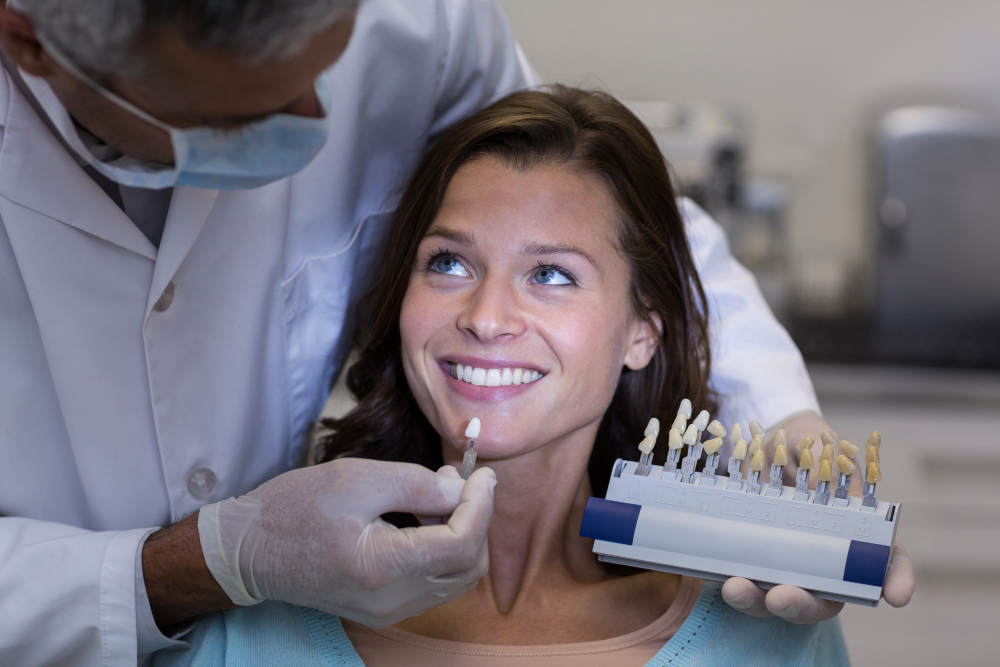
Why Patients Choose Porcelain Veneers in Durham NC
Veneers solve cosmetic problems that other treatments can’t address together. Severely worn or chipped edges from bruxism or normal wear. Multiple front teeth with shape, color, or position issues that combine into a smile-zone problem. Intrinsic stains from old root canal treatment, antibiotics, or fluorosis. Gaps too wide to bond cleanly. Minor alignment issues that don’t justify Invisalign. Old dental work from previous decades that no longer matches your natural teeth.
What makes Durham specific as a veneer market: the academic and medical communities here are full of patients with sharp aesthetic standards. Researchers, professors, physicians, attorneys, biotech professionals. They can spot over-prepped, over-bright, identically-shaped veneers from across the conference table, and that’s exactly the result they’re trying to avoid. Conservative prep, natural shade design, varied tooth shape — the things that distinguish thoughtful veneer work from generic veneer work — are what most of our Durham patients actually care about.
When Porcelain Veneers Are the Right Answer
Veneers may be an excellent option when you’re looking to improve specific cosmetic concerns that affect the appearance of your smile, including:
- Worn or chipped front-tooth edges —Veneers can restore teeth that have lost their original shape due to wear, grinding, or minor damage.
- Discoloration whitening can’t fix —Deep stains that don’t respond well to professional whitening can often be masked with veneers for a brighter, more uniform appearance.
- Old dental work that no longer matches — crowns or veneers from previous decades have aged differently than the surrounding natural teeth.
- Front-tooth gaps too wide for bonding —Veneers can improve symmetry by reshaping teeth that appear too small, irregular, or disproportionate.
- Minor alignment quirks —Small to moderate spaces can often be closed with veneers without the need for orthodontic treatment.
- Full smile-zone reconstructions —Slightly crooked, rotated, or uneven front teeth may be improved with veneers when comprehensive orthodontics isn’t necessary.
→ Still deciding between veneers, whitening, and bonding? Our Durham cosmetic dentistry page walks through the comparison.
Porcelain Veneers vs Lumineers — Which Is Right for You?
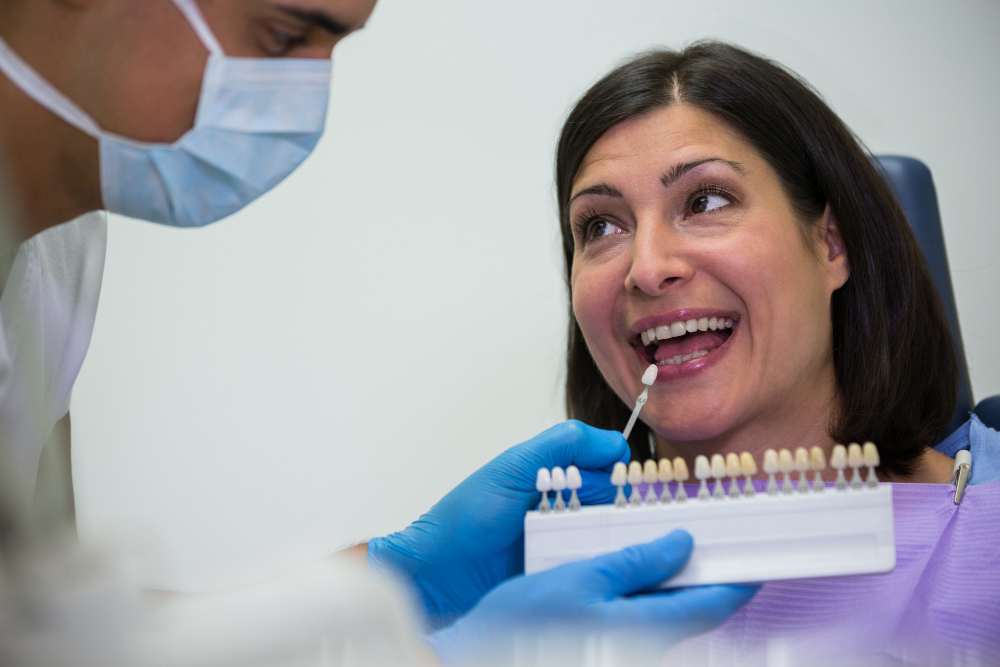
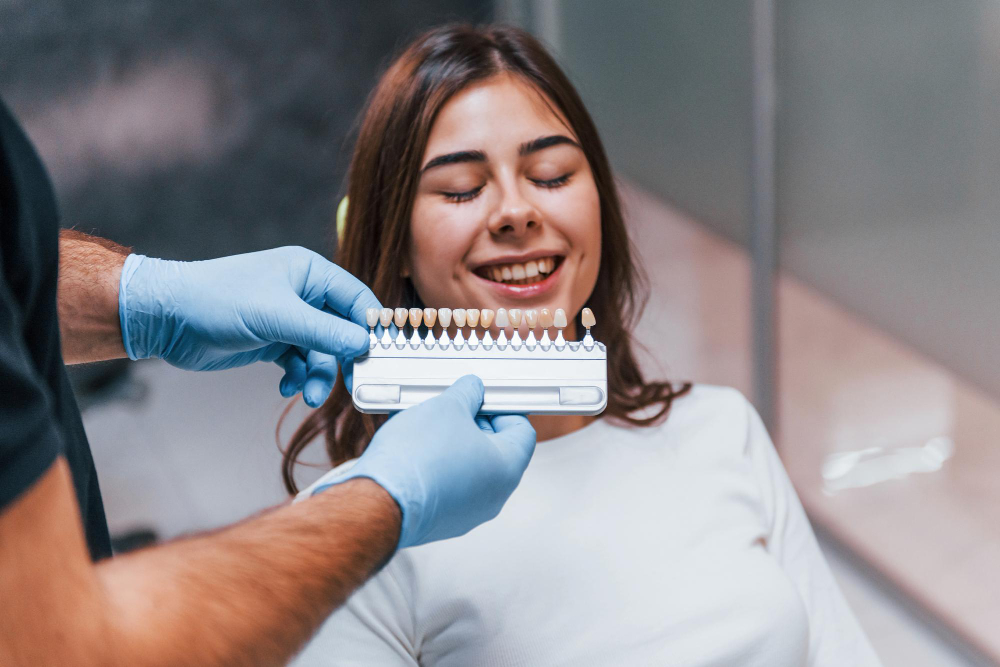
Lumineers® are a specific brand of ultra-thin porcelain veneer designed to require little or no enamel preparation before placement. For the right candidate — someone whose existing teeth are well-aligned, healthy in shape, and just need a color or minor contour change — they’re an excellent option because they preserve essentially all of your natural tooth structure. The trade-off is that Lumineers can’t correct as much as traditional veneers can: significant shape changes, larger color changes, or correction of crowding or rotation generally need traditional veneers with some enamel prep.
At the consultation we’ll evaluate your teeth and tell you honestly which is the right fit. We don’t default to one over the other — we recommend based on what your specific case actually needs. Some patients walk in expecting Lumineers and turn out to be better candidates for traditional veneers; others walk in expecting traditional veneers and turn out to be ideal Lumineers candidates. The point of the consultation is to get that answer right, not to sell you on a particular product.
Who Calls Us for Porcelain Veneers in Durham
Our Durham veneer caseload reflects the Triangle’s professional and academic mix. Duke and UNC faculty and staff. RTP and biotech professionals. Attorneys, physicians, and healthcare workers. Parents from Hope Valley and Southpoint addressing cosmetic concerns they’ve thought about for years. Younger professionals in their late twenties and thirties who want a smile that matches their professional trajectory. Patients commuting in from Chapel Hill, Carrboro, Cary, and Morrisville because we’re an easy I-40 exit and our case approach is more conservative than what they were quoted closer to home.
We also see significant second-opinion volume on multi-tooth cases. Patients quoted ten or twelve veneers somewhere else who want a second look that focuses on the minimum number needed. Patients with old veneers from the 2000s that need refreshing. Post-overseas-veneer-trip patients (Turkey, Mexico) needing follow-up care. The pattern is the same across all of them: honest assessment of what’s actually needed versus what could be sold.
A Few Porcelain Veneer Cases We’ve Treated (Anonymized)

The Duke faculty member who needed fewer veneers than originally quoted
Came in for a second opinion after being quoted ten veneers at another practice for what she described as “my two front teeth bothering me.” Our assessment: six veneers was the right number for her actual aesthetic concern, and the upper canines and laterals could be addressed with conservative bonding rather than veneers. Final case was four traditional veneers plus targeted bonding. Saved her roughly thirty percent of the original quote and preserved more natural tooth structure. She finished treatment in five weeks.
The Chapel Hill physician with intrinsic antibiotic staining
Tetracycline staining from childhood antibiotics in the 1970s — the classic gray-banded discoloration that doesn’t respond to any amount of whitening. She’d been told for years to “just accept it” or get a full set of crowns. We did eight upper veneers and four lower veneers across the visible smile zone with shade selection that compensated for the underlying tooth color and finished with a smile that looks completely natural in daylight, in operating-room lighting, and in family photos. She told us at the final visit it was the first time she’d smiled wide for a photograph since high school.
The RTP biotech researcher with one rotated lateral incisor
Single tooth bothering her since adolescence — an upper lateral incisor rotated about fifteen degrees out of alignment. The case was small enough that Invisalign would have been overkill, but it was a real cosmetic concern she’d lived with for twenty-five years. One veneer, no prep on the adjacent teeth, total cost just over $1,500. Two appointments. She told us she should have done it in her twenties.
The Veneer Process — Step by Step
Your smile transformation is completed over several carefully planned appointments, allowing every detail to be customized before your veneers are permanently placed.
Initial Consultation & Smile Planning
The process begins with a detailed evaluation of your teeth, gums, bite, and facial features. We’ll discuss the improvements you’d like to make, capture diagnostic photos, and determine whether porcelain veneers or Lumineers are the better fit for your goals. If desired, digital smile previews can help you visualize potential results before treatment begins.
Preparing Your Teeth
For traditional porcelain veneers, only a very thin layer of enamel is gently removed to create room for the restorations. Patients receiving Lumineers often require little to no enamel reduction. Digital impressions or precise molds are then taken, and temporary veneers are placed while your permanent restorations are being handcrafted.
Wearing Your Temporary Veneers
You’ll wear your temporary veneers for approximately two to three weeks. During this time, you can experience your new smile before the final veneers are completed. Any concerns about appearance, comfort, or bite can be addressed before your permanent restorations are bonded.
Final Placement Appointment
Once your custom veneers arrive from the dental laboratory, we’ll carefully evaluate their fit, color, and overall appearance. After confirming everything meets your expectations, each veneer is securely bonded to your teeth for a durable, natural-looking result.
Long-Term Care
A follow-up visit allows us to verify that your bite feels comfortable and your veneers are functioning properly. With good oral hygiene and regular dental checkups, your new smile can remain beautiful for many years.
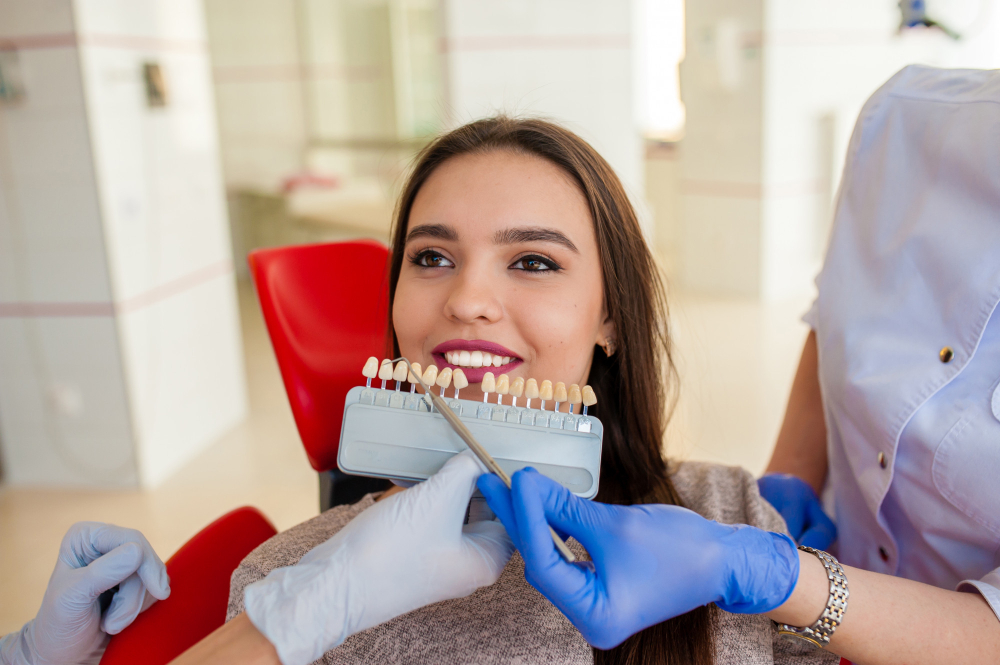
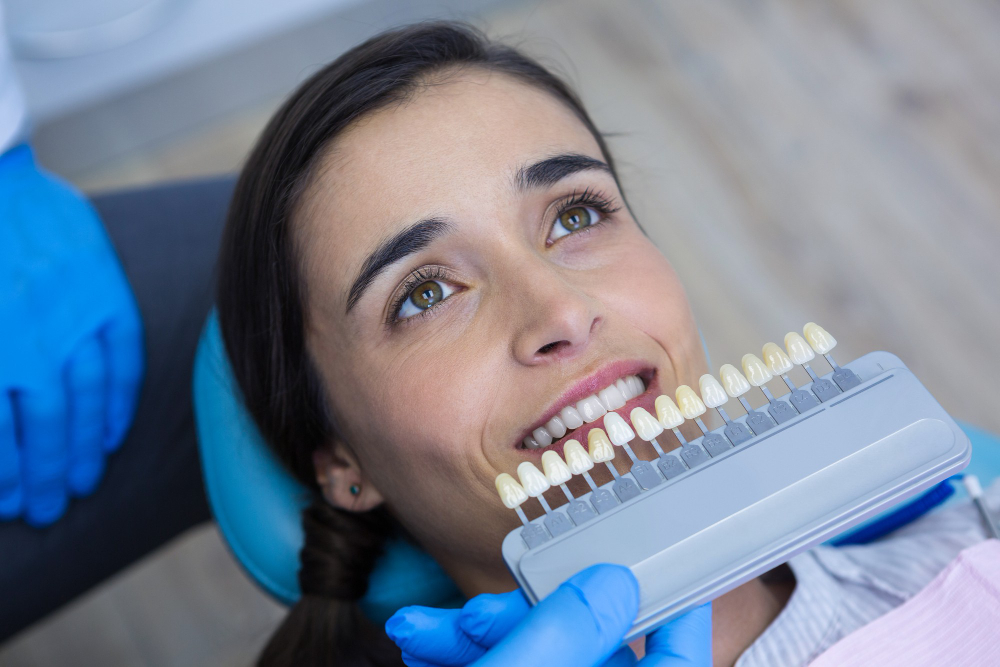
Conservative Porcelain Veneer Prep — Why It Matters
There’s a school of veneer dentistry that aggressively reduces tooth structure to make placement easier and case logistics cleaner. That approach produces beautiful initial results, but it removes enamel that doesn’t grow back — and committing a patient to lifelong veneer replacement every time the old set needs to come off is a real downside. We work the opposite direction. Our default is the minimum prep required for the case at hand.
What conservative prep means practically: more of your original tooth structure stays intact under the veneer; future replacements or repairs are easier; you have more options if something needs to change down the line. The trade-off is that conservative prep can’t correct as much as aggressive prep does — if your case genuinely needs significant shape or position change, we’ll discuss whether Invisalign first (to fix alignment before veneers) or more traditional prep (to fix it through the veneer) makes more sense for your specific situation. The decision is yours; the honest analysis is ours.
Caring for Your Porcelain Veneers — Long-Term
Porcelain veneers are designed to be durable, but they still rely on healthy daily habits. Caring for them is much like caring for your natural teeth—brush twice each day with a non-abrasive toothpaste, floss daily, and visit your dentist for routine cleanings and exams every six months.
Although porcelain resists staining from coffee, tea, wine, and similar beverages, the natural tooth structure around the veneers can still develop cavities or gum disease if oral hygiene is neglected. Keeping your teeth and gums healthy is essential for protecting your investment.
If you grind or clench your teeth while sleeping, a custom nightguard can help prevent unnecessary pressure that may chip or shorten the lifespan of your veneers. It’s also best to avoid biting hard objects, chewing ice, opening packages with your teeth, or biting your fingernails. With proper maintenance, porcelain veneers often provide beautiful results for 15 to 25 years.
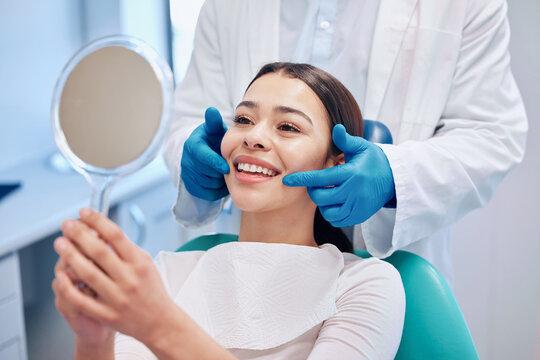
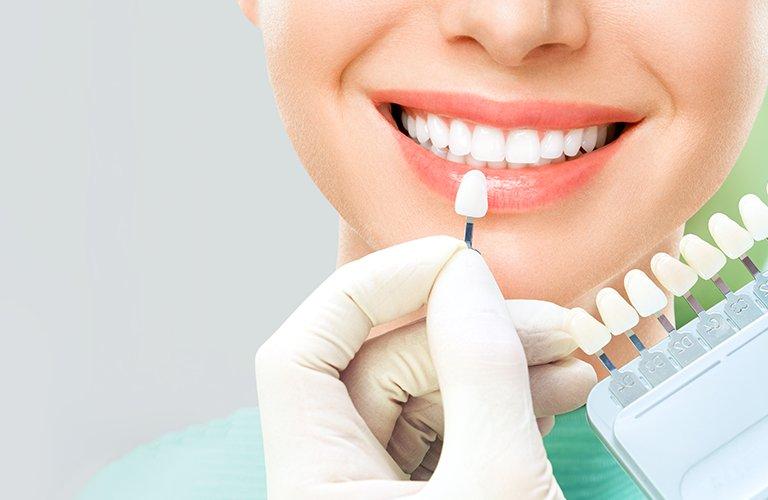
Cost & Financing for Porcelain Veneer Treatment
Porcelain veneers at our Durham office run $1,000–$2,000 per tooth depending on case complexity. Single-tooth corrections fall toward the lower end. Multi-tooth smile-zone cases (6–10 veneers) typically run $6,000–$20,000 total. Lumineers fall in roughly the same range — the choice between traditional and Lumineers is driven by clinical fit, not budget. Every patient receives a written, itemized estimate at the consultation.
We accept most major dental insurance plans, but pure cosmetic veneers are typically considered elective and aren’t covered. Insurance may cover portions of treatment with functional components. Our front desk verifies your specific coverage before treatment begins. Sunbit monthly financing covers the gap on larger cases at predictable monthly payments, and the O2 Advantage Plan offers in-house discounted rates for uninsured patients.
Veneers FAQs
How much do porcelain veneers cost in Durham, NC?
$1,000–$2,000 per tooth depending on case complexity. Single-tooth corrections fall toward the lower end; complex multi-tooth reconstructions toward the upper end. A full smile-zone case using 6–10 veneers typically runs $6,000–$20,000 total. Written estimate at the consultation.
How long do porcelain veneers last?
With reasonable care — brushing, flossing, regular cleanings, and a nightguard if you grind — well-placed porcelain veneers last 15 to 25 years.
Are Lumineers the same as porcelain veneers?
Lumineers are a specific brand of ultra-thin porcelain veneer designed to require little or no enamel prep. For candidates with well-aligned, healthy teeth needing color or minor shape changes, they’re an excellent option. For cases needing significant shape, position, or color change, traditional veneers produce a better result.
Will veneers damage my teeth?
Conservative-prep veneers require a very small amount of enamel reduction — a fraction of a millimeter — that doesn’t weaken the underlying tooth meaningfully. Lumineers often require no prep at all. We default to the minimum prep required for your case.
Does insurance cover veneers?
Pure cosmetic veneers are typically not covered — they’re considered elective. Insurance may cover portions with functional components. We verify your coverage before treatment.
I was quoted a lot of veneers somewhere else — do I really need that many?
Sometimes yes, often not. We’re happy to provide second opinions on multi-tooth veneer cases. Our default is the minimum number of veneers that achieves your actual goal. Sometimes that’s ten; sometimes it’s four veneers plus bonding on adjacent teeth. The honest assessment is what we owe you.
How long does the whole veneer process take?
From smile design consultation to final delivery is typically four to six weeks. Smile design and prep visits are spaced a week or two apart; temporaries are worn for two to three weeks; the delivery visit is the last major appointment. Follow-ups at one week and one month complete the case.
What’s the difference between veneers and crowns?
Veneers cover only the front (and sometimes the edges) of the tooth and preserve most of the original structure. Crowns cover the entire tooth and require more extensive preparation. Veneers are the right answer when the tooth is healthy and the issue is primarily cosmetic; crowns are the right answer when the tooth is structurally compromised.
Book Your Porcelain Veneers Consultation in Durham
Veneers are a significant decision and we treat them that way. Conservative prep, honest case assessment, real custom design, and a result built to last. Book online or call (919) 813-2267 — the consultation is free.
Request More Information About Veneers in Durham
Share a few details below, and our Durham cosmetic team will reach out to answer questions and help you schedule a veneer consultation.
We provide Porcelain Veneer Consultation for patients throughout the Durham areas?
Schedule Today!
We look forward to meeting you. Call (919) 813-2267 or request an appointment online to set up your first visit. We’ll be in touch soon.
O2 Dental Group of Durham
Monday:
Tuesday:
Wednesday:
Thursday:
Friday:
Saturday:
Sunday:
9:00am – 5:00pm
9:00am – 5:00pm
9:00am – 5:00pm
9:00am – 5:00pm
8:00am – 2:00pm (every other Friday)
CLOSED
CLOSED
