
Dental Fillings Wilmington, NC
A Small Cavity Today Is a Simple Fix. Wait, and It Isn’t.
Here’s the thing most people don’t realize about a cavity: caught early, it’s one of the quickest, most routine things we do — a single visit, a little numbing, you’re back to your day in under an hour. Left alone, that same small spot of decay keeps tunneling deeper until it reaches the nerve, and suddenly you’re looking at a root canal and a crown instead of a filling. The tooth doesn’t warn you when it crosses that line. That’s exactly why we’d rather see you for the small stuff. At O2 Dental Group of Wilmington, on Market Street in Ogden, most fillings are done same-visit with tooth colored composite that blends in so well you’ll forget which tooth we worked on
Think you might have a cavity? Call us at (910) 377-6453 and we’ll get you looked at.
When a Filling Is the Right Call
Your enamel is the hardest tissue in your body, but it’s not bulletproof — and on the coast, between sweet tea, coffee, and the occasional acidic favorite, it takes a beating. We use fillings to handle:
- Tooth decay (cavities). The most common reason by far. Bacteria produce acid, the acid eats a hole in the enamel, and a filling seals it before it spreads.
- Worn or eroded teeth. Years of chewing, grinding, or acid wear can thin a tooth down. A filling can rebuild lost structure.
- Sensitive spots. Twinges from hot or cold often mean exposed dentin near the gumline. A filling can cover that and calm the sensitivity.
- Small chips and cracks. A minor fracture from biting something hard can be smoothed and sealed before it grows.
If the damage is bigger than a filling can safely handle, we’ll tell you straight — sometimes the honest answer is
an onlay or a crown, and we’d rather get it right once than patch it twice.
Tooth-Colored Fillings (and the Other Options)
The vast majority of fillings we place in Wilmington are composite — a tooth-colored resin that bonds directly to the tooth and disappears into your smile. It’s the default for anything visible, and it’s what most patients want. A few notes on materials so you know your options:
- Composite (tooth-colored). Natural-looking, bonds to the tooth, great for front and visible teeth. Modern composites have come a long way — for many teeth their lifespan now rivals the old silver fillings.
- Silver amalgam. Very strong and long-lasting (often 12–20 years), which is why it was the standard for back molars for generations. The trade-off is the obvious silver-gray color. Gold and ceramic. Durable and, in gold’s case, very long-lived — but pricier and less common for routine fillings.
- Glass ionomer. Releases fluoride and is useful in specific spots, like below the gumline, though it’s less hard-wearing under heavy chewing.
Our doctors will walk you through what makes sense for the specific tooth — where it sits, how much force it
takes, how visible it is — and what you’d prefer.
What Your Visit Actually Looks Like
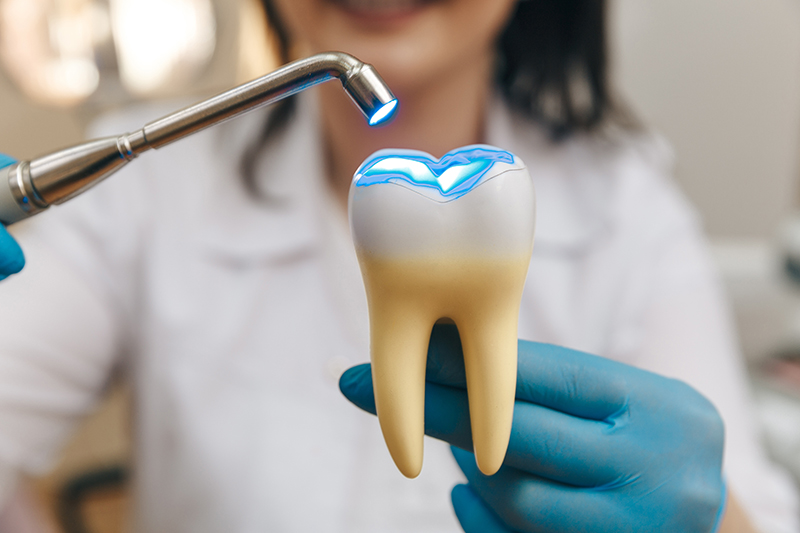
No mystery to it. We’ll take a quick X-ray if we need to see how deep the decay goes, then numb the area so you’re comfortable. We clean out the decayed part of the tooth, prep the surface so the filling grips, then build the composite up in thin layers, hardening each one with a curing light. Last step is shaping and polishing so it matches your bite — you shouldn’t feel it sitting high when you close. Most single fillings are done in well under an hour.
After Your Filling
You can usually eat once the numbness wears off — just give it a little time. A few simple things help the filling settle in and last:
- Go easy on hard or sticky foods for the first day (nuts, ice, taffy, anything that fights back).
- Brush and floss like normal — gently around the new filling.
- A bit of cold sensitivity for a few days is normal and fades.
- If you get sharp pain, lasting sensitivity, or the bite feels off after a few days, call us. A quick adjustment usually fixes it.

How Long Fillings Last
It depends on the material and the tooth. Silver amalgam can run a couple of decades. Composite fillings vary more — a filling on a back molar that grinds all day works harder than one on a front tooth — but with good care most give you many solid years before they need a touch-up. Keeping up with your cleanings is how we catch a worn filling early, before it leaks or lets decay sneak back underneath.
When a Filling Isn't Enough
We’ll always be honest about this. If a cavity is large, or the tooth is cracked or already heavily restored, a filling may not have enough healthy tooth to hold onto — and forcing one can set you up for a fracture later. In those cases the better long-term answer is usually a crown, an inlay/onlay, or — if decay has reached the nerve — root canal treatment. We’ll explain why, show you what we’re seeing, and let you decide.
Cost and Insurance
Most fillings at our Wilmington office run $200 to $500 per tooth. The range comes down to two things: where the cavity is (a front, or anterior, tooth generally costs less than a back, or posterior, molar) and how many surfaces of the tooth need to be covered. Fillings are also one of the best-covered procedures in dentistry — most dental plans pay 80% to 100% of the cost, depending on your specific plan, and we verify your exact benefits before we start so there are no surprises. For anything out of pocket, we offer the in-house O2 Advantage Plan plus CareCredit and Sunbit financing.
Why O2 Dental Group of Wilmington
- Most fillings done in a single visit, with tooth-colored composite as the default
- Honest guidance on when a filling is right — and when it isn’t
- Convenient Market Street location in Ogden, serving Porters Neck, Mayfaire, and the wider Cape Fear area
- Open until 6pm Monday through Thursday for after-work visits
- Clear pricing and financing, with benefits verified up front

Don’t let a small cavity become a big one. Call O2 Dental Group of Wilmington at (910) 377-6453 or request an appointment online.
Frequently Asked Questions
How much does a filling cost in Wilmington?
Most fillings run $200 to $500 per tooth, depending on whether it’s a front or back tooth and how many surfaces are involved. Most insurance plans cover 80% to 100%, and we verify your benefits before treatment.
Do fillings hurt?
Not during the procedure — we numb the tooth first, so most people feel pressure at most. Some mild cold sensitivity afterward is normal and settles within a few days.
Will my filling match my tooth?
If it’s composite, yes — it’s shade-matched to blend in, and on visible teeth it’s hard to spot even up close.
How do I know if I have a cavity?
You often don’t until it’s grown, which is the point of regular checkups. Watch for sensitivity, a rough spot you feel with your tongue, or a twinge when you bite. When in doubt, get it checked.
Should I replace my old silver fillings?
Not just for looks, unless you want to — a sound silver filling can keep doing its job. We’d replace one if it’s cracked, leaking, or decay has formed around it.
How long after a filling can I eat?
Once the numbness wears off, usually a couple of hours. Skip hard and sticky foods that first day.
Are tooth-colored fillings as strong as silver ones?
Modern composite is strong and bonds to the tooth. For most teeth it holds up very well; for a heavy-grinding back molar, we’ll talk through whether composite or something sturdier is the smarter pick.
Schedule Today!
We look forward to meeting you. Call (910) 377-6453 or request an appointment online to set up your first visit. We’ll be in touch soon.
O2 Dental Group of Wilmington
Monday:
Tuesday:
Wednesday:
Thursday:
Friday:
Saturday:
Sunday:
8:00am – 6:00pm
8:00am – 6:00pm
8:00am – 6:00pm
8:00am – 6:00pm
CLOSED
CLOSED
CLOSED
