
Root Canal Treatment in Fayetteville, NC
The dread around root canals is mostly inherited from a different era — older tools, slower techniques, and patients who waited until a tooth was screaming before they came in. The version we do today barely resembles that. Caught at the right time and handled with modern anesthesia, a root canal feels a lot like having a deep filling done, and you leave with the pain gone and the tooth still in your head. We do this work in-house at our Skibo Road office — which matters when your time is tight and a half-day at a separate endodontist across town isn’t realistic, whether you’re active-duty at Fort Bragg, a parent juggling school runs, or just trying not to burn a workday.
Root Canal
Learn how root canal treatment removes infected or damaged tissue from inside a tooth, relieves pain, and helps preserve your natural tooth. This video explains the procedure, what to expect during treatment, and how a restored tooth can continue to function normally for years.
Share with PatientTooth that’s been throbbing for days? Don’t tough it out. Call (910) 484-5141 and we’ll get you seen.
What a Root Canal Actually Does
At the core of each tooth is a strand of living tissue — the pulp — made of nerves and blood vessels. When decay, a crack, or repeated work on the same tooth lets bacteria reach that pulp, it becomes inflamed or infected, and because it’s sealed inside hard tooth with nowhere to drain, it can’t recover on its own. The ache builds, and left long enough the infection pushes out into the jawbone. A root canal clears out that damaged pulp, disinfects and shapes the narrow canals inside the roots, and fills them with a sealing material called gutta-percha. The tooth is no longer “live,” but it’s still your tooth — root, bone, and bite intact — and it can last for decades.
Signs You Might Need One
Lingering pain that shrugs off ibuprofen is the clearest warning. The patterns we see most:
- A toothache that won’t quit — deep, throbbing, often worse lying down at night or when you bite on it.
- Sensitivity that hangs around — hot or cold that keeps stinging long after the drink is gone.
- A pimple or swelling on the gum — a bump near the tooth root, sometimes draining; a sign infection has reached the tip of the root.
- One tooth going dark — a single tooth dimming in color, often after an old knock or injury, can mean the pulp has died.
- A tooth that’s been through a lot — repeated fillings or a big old restoration can finally tip the pulp past the point of healing.
Why we don’t advertise “same-day emergency root canals.” Plenty of offices do, but the clinical reality rarely supports rushing it. If you come in hurting, the right first move is getting you out of pain that day — draining an abscess if needed, antibiotics for active infection, and proper pain relief — then scheduling the root canal for when the tooth can actually be numbed and cleaned correctly, usually within a few days. A good root canal needs time and the right setup, not a forced slot while the infection is raging. You’ll leave comfortable; the tooth gets fixed right.
What the Procedure Involves
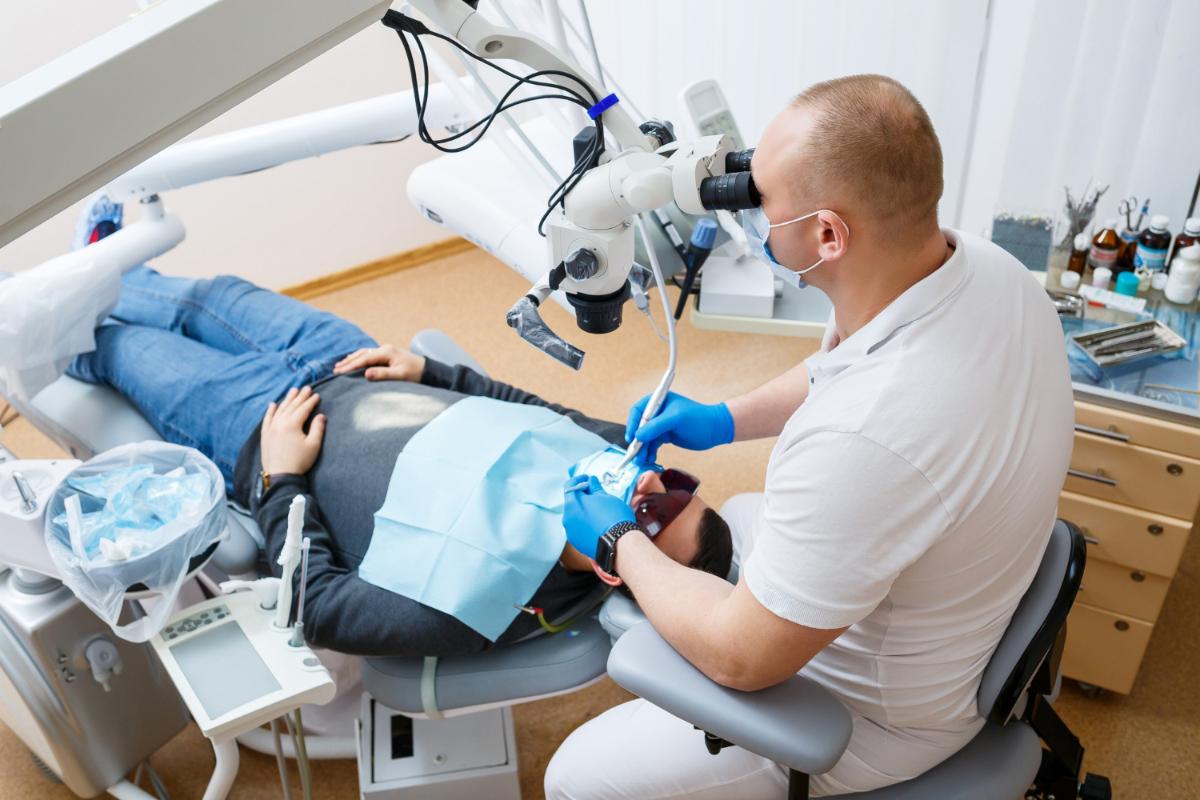
A root canal runs one to two visits, roughly 60 to 90 minutes each. We numb the tooth fully first — if you feel anything sharp, we stop and adjust, never push through — and place a thin rubber dam to keep the area clean and dry. From an opening in the top of the tooth, we remove the damaged pulp, clean and shape the canals with fine instruments, rinse with antibacterial solution, and seal everything with gutta-percha. Front teeth and bicuspids are usually one-visit; molars, with their extra canals, sometimes take two with a temporary filling in between. Afterward the tooth needs a crown to protect it.
Recovery
Most people feel better right away, since the source of the pain is gone. Expect mild to moderate soreness for a day or two that over-the-counter pain relievers handle easily. Stick to softer foods for the first day or two and avoid chewing on the treated tooth until the crown is on. Once the crown is placed, the tooth works like any other — with good care and that protective crown, treated teeth succeed well over 90% of the time and last for years.
Cost and Insurance
A root canal at our Fayetteville office runs $800 to $1,800, depending on the tooth and how many canals it holds — front teeth and bicuspids sit lower, molars higher. The tooth then needs a crown to guard it against fracture, typically $1,200 to $2,000 for the crown. Insurance generally treats a root canal as a major restorative procedure, often covering around 50% once your deductible is met, with crown coverage varying by plan. We confirm your exact benefits before we start, and for the patient portion, the O2 Advantage Plan, CareCredit, and Sunbit keep it manageable.
Root Canal — Fayetteville – Frequently Asked Questions
What does it cost?
$800 to $1,800 for the root canal, then $1,200 to $2,000 for the crown. Insurance usually covers the root canal around 50% as a major procedure; we verify first.
Does it hurt?
No more than a deep filling — the tooth is fully numb, and you leave with less pain than you came in with.
Same-day emergency root canal?
No. We get you out of pain that day, then do the root canal properly within a few days once the tooth can be numbed well.
Do I need a crown after?
Almost always — a treated tooth is brittle and needs protection.
What's the alternative?
Pulling the tooth, then replacing it with an implant or bridge. Saving your own tooth is usually the better call.
Book a Root Canal Consultation in Fayetteville
A tooth that’s hurt for more than a few days won’t fix itself. Book online or call.
Schedule Today!
We look forward to meeting you. Call (910) 484-5141 or request an appointment online to set up your first visit. We’ll be in touch soon.
O2 Dental Group of Fayetteville
Monday:
Tuesday:
Wednesday:
Thursday:
Friday:
Saturday:
Sunday:
8:00am – 6:00pm
8:00am – 6:00pm
8:00am – 6:00pm
8:00am – 6:00pm
8:00am – 4:00pm
CLOSED
CLOSED
