
Porcelain Veneers in Southern Pines, NC
Porcelain Veneers in Southern Pines, NC — Custom Smile Design in the Sandhills
Porcelain veneers are designed for patients who want to address multiple cosmetic concerns with one treatment. By placing thin layers of custom-made porcelain over the front of your teeth, veneers can enhance shape, brightness, proportion, and alignment while offering a durable cosmetic solution that often lasts between 15 and 25 years with proper care.
Veneers in the Sandhills have their own context. Many of our Southern Pines veneer patients are addressing decades of accumulated dental work that no longer matches their natural teeth — crowns from the 1980s, old porcelain veneers from the early 2000s, mismatched restorations from different providers over the years. The work needs to look natural in country club lighting, in family portraits, in the dining rooms at Pinehurst, and in everyday life. Our standard is veneers that look like your teeth at their healthiest, not like obvious cosmetic work. Same shade family as your existing teeth and skin tone. Varied shape across the smile line. Real translucency at the edges.
Explore everything you need to know about porcelain veneers, from determining whether they’re the right cosmetic solution to understanding the differences between porcelain veneers and Lumineers. We also walk you through the treatment process, our conservative tooth-preservation approach, aftercare recommendations, and the typical investment for veneers in the local market.
Veneers
Learn how porcelain veneers can improve the appearance of chipped, stained, worn, or uneven teeth to create a natural-looking, confident smile.
Share with Patient
Why Patients Choose Porcelain Veneers in Sandhills
Veneers handle cosmetic concerns other treatments can’t address together — worn edges, intrinsic stains, old dental work that no longer matches, multiple front teeth with combined issues, gaps too wide for bonding, minor alignment quirks. For older patients in particular, veneers solve the specific problem of unified smile-line restoration when the accumulated dental work of decades has aged into a patchwork.
What makes the Sandhills specific as a veneer market: the patient mix runs older and more deliberate. Retirees from Pinehurst, Southern Pines, and Whispering Pines. Long-time Moore County residents replacing dental work from previous decades. The conversation tends to be longer and more careful than in younger markets — patients have had a lot of time to think about what they want, and they’re looking for honest case planning rather than a sales pitch. Conservative prep, the minimum-veneers-needed approach, working with existing dental work where it’s viable rather than replacing it wholesale — these are exactly the conversations Sandhills patients want.
When Porcelain Veneers Are the Right Answer
Veneers are the right call when these specific issues are what you want changed:
- Worn or chipped front-tooth edges — from decades of wear, bruxism, or accidents.
- Discoloration whitening can’t fix — intrinsic stains, antibiotic discoloration (common in patients who grew up in the 1940s–1970s), root-canal darkening.
- Old dental work that no longer matches — the most common case at our Southern Pines office — decades-old crowns, veneers, or bonding that has aged differently than surrounding natural teeth.
- Front-tooth gaps from years of shift — gradual spacing changes after old orthodontic work or natural tooth migration.
- Replacement of failing front-tooth restorations — veneers can replace some older crowns when the underlying tooth structure is still healthy enough to support the more conservative restoration.
- Full smile-zone reconstructions — for patients ready to unify decades of accumulated dental work into one coherent smile.
→ Still deciding between veneers, whitening, and bonding? Our Southern Pines cosmetic dentistry page walks through the comparison.


Porcelain Veneers vs Lumineers — Which Is Right for You?
Lumineers® are an ultra-thin type of porcelain veneer that can often be placed with little to no modification of the natural tooth. They work best for patients with healthy, properly positioned teeth who want to improve the color, close small gaps, or make subtle cosmetic enhancements while preserving as much enamel as possible. However, when teeth require more extensive reshaping, correction of noticeable discoloration, or improvements for rotated or crowded teeth, traditional porcelain veneers typically provide more predictable and natural-looking results.
During your consultation, we’ll carefully examine your smile, discuss your cosmetic goals, and recommend the option that best suits your individual needs. Our focus is on selecting the treatment that delivers the most attractive, long-lasting outcome—not steering you toward one type of veneer over another. Whether Lumineers or traditional porcelain veneers are the better choice depends entirely on your teeth, expectations, and desired results.
Who Calls Us For Porcelain Veneers Treatment in Southern Pines NC
Our Southern Pines veneer caseload reflects the Sandhills demographic. Retirees from Pinehurst, Southern Pines, Whispering Pines, and Seven Lakes addressing accumulated dental concerns. Long-time Moore County residents whose decades-old front-tooth work no longer matches. Patients with a single failing crown or veneer who want the most conservative possible replacement. Pre-event patients on multi-month timelines — milestone family gatherings, weddings, major birthdays. Second-home owners in Pinehurst who do consultation and treatment during their Sandhills stays.
Conservative-case planning is particularly relevant to our patient base. Many Sandhills patients have already had significant dental work and are wary of more aggressive prep — they’d rather replace one veneer than redo a whole arch, and they’d rather work around existing healthy restorations than rip them out. Our default approach matches that disposition: minimum prep, minimum new restorations, selective replacement, coordinated shade work to unify the existing landscape.

A Few Porcelain Veneer Cases We’ve Treated (Anonymized)
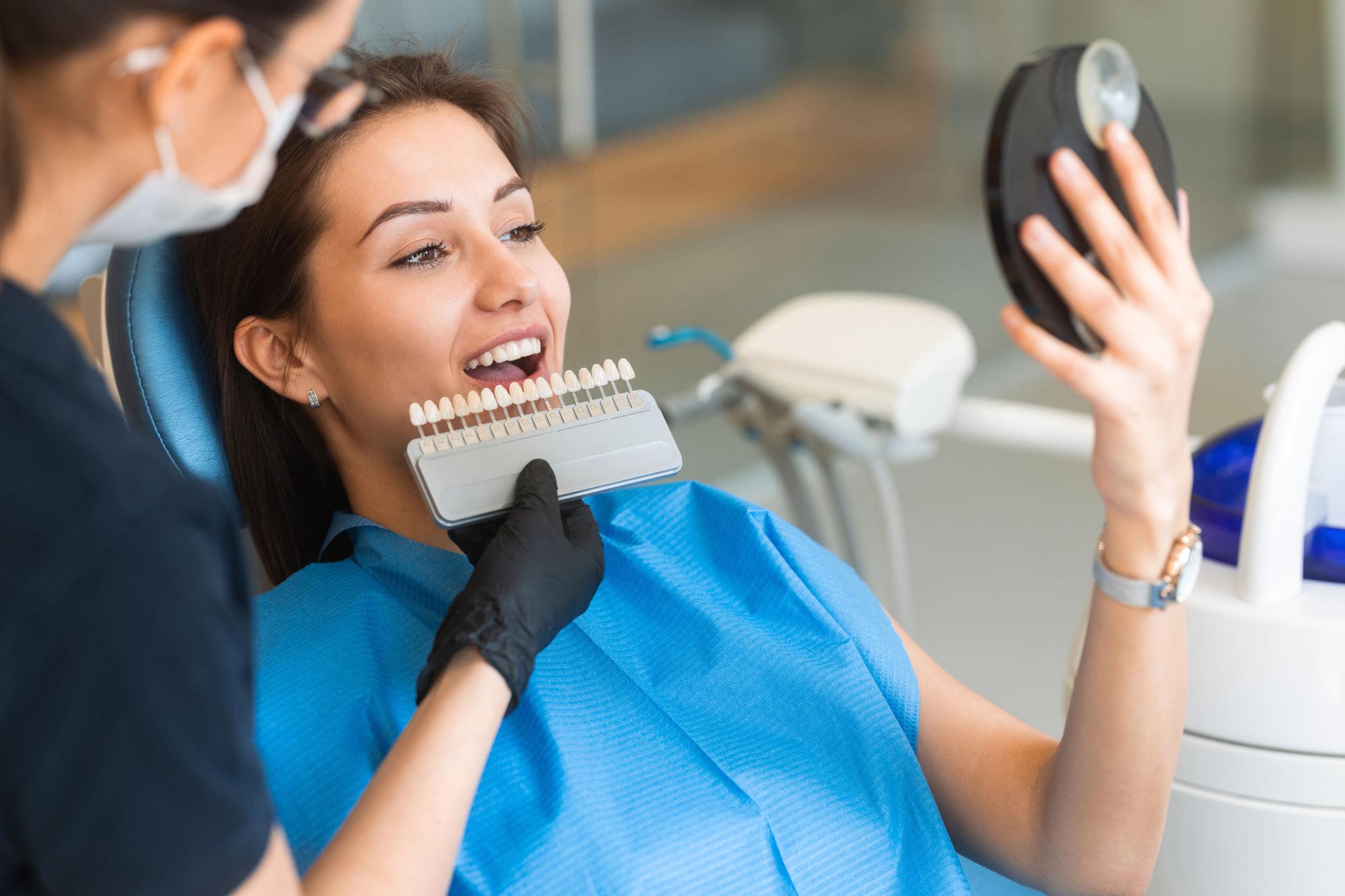
The Pinehurst retiree with four mismatched front-tooth restorations
Two crowns from 1989, one veneer from 2003, one composite bonding from 2015 — placed by four different dentists over three decades, each in slightly different shades. He didn’t want to redo everything. We assessed honestly: the 2003 veneer and the 2015 bonding could stay; the two older crowns needed to come off; new restorations would shade-match the existing 2003 veneer (which set the smile zone’s overall color). Final result: two new veneers replacing the old crowns, no change to the other two restorations, plus targeted whitening on the natural teeth to unify the broader smile. Total investment around $5,500. The smile looks completely coherent and the original 2003 work is still serving him.
The Whispering Pines retiree planning her granddaughter’s wedding photos
Wedding nine months out, family pictures would hang in living rooms for decades. Mild generalized wear plus chipping on two upper front teeth from a fall during gardening. Wanted to look her best without anything obvious. Four upper veneers with conservative prep, completed twelve weeks before the wedding so the smile had time to feel normal before the photography. Shade selected to match her actual current natural-tooth color rather than artificially lighten. She told us at her final visit that the photographs came back looking like her at her best — not like someone else.
The Aberdeen patient with one failing old veneer
Single porcelain veneer placed in the late 1990s on her upper-right central incisor. The veneer had served well for nearly twenty-five years but was beginning to show marginal wear and a small crack near the gum line. She wanted the most conservative replacement possible. We removed the failing veneer, evaluated the underlying tooth (still healthy enough for another veneer rather than a full crown), and placed one new veneer color-matched to her current adjacent natural teeth (which had aged in the intervening years). One-tooth, one-visit-pair case. The original veneer served twenty-five years; the new one is designed to serve another two-plus decades.
The Porcelain Veneers Process — Step by Step
Creating a natural-looking smile isn’t rushed. Each stage is designed to ensure your veneers look comfortable, balanced, and uniquely yours.
Comprehensive Smile Evaluation
During your first visit, we’ll examine your oral health, discuss your cosmetic concerns, and identify the changes you’d like to see. Clinical photographs, digital scans, and treatment recommendations help us develop a personalized smile plan before any work begins.
Customized Tooth Preparation
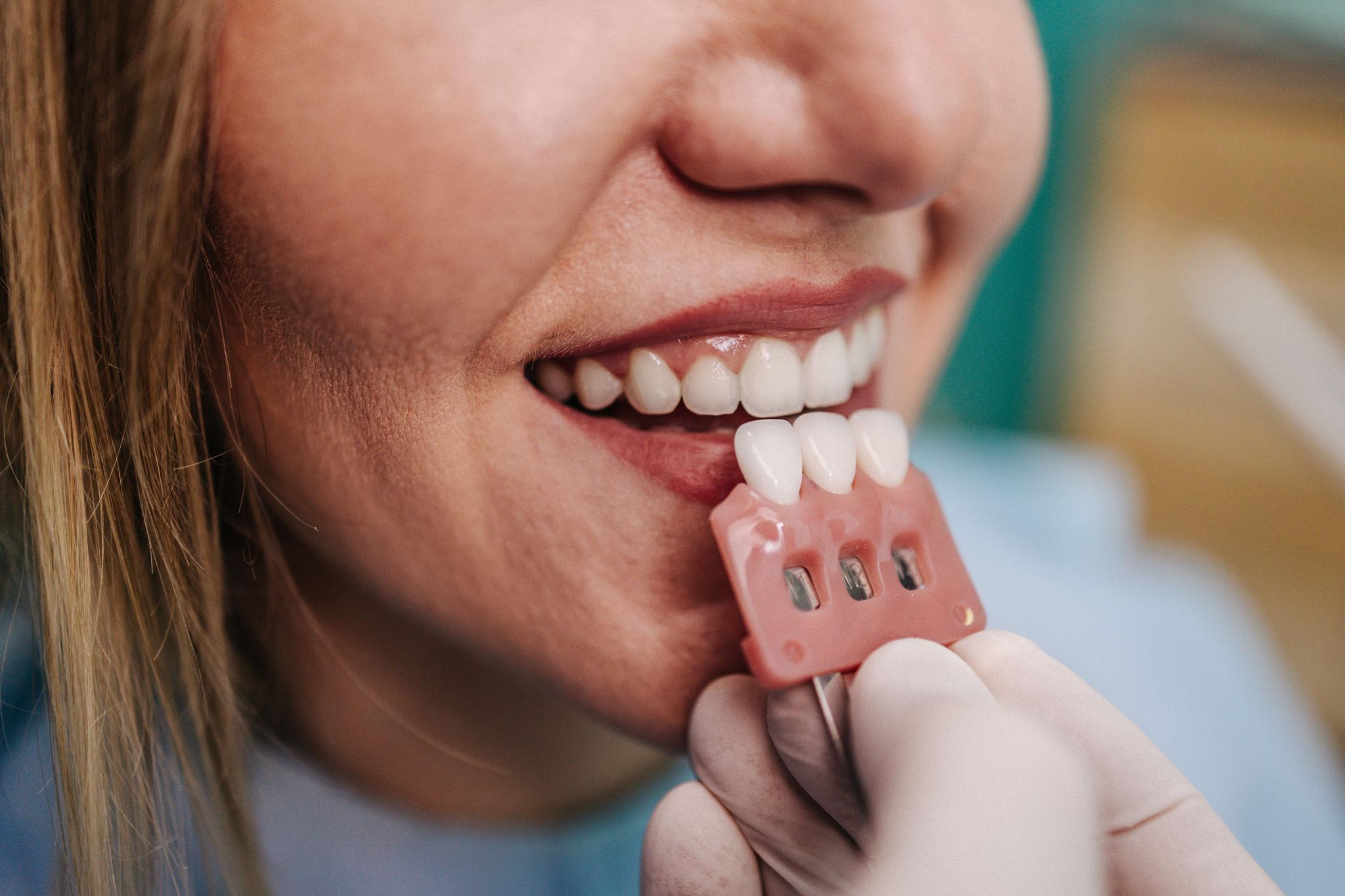
Traditional veneers require minimal enamel reshaping so they fit naturally against your teeth. Patients choosing Lumineers may avoid this step altogether or require only slight adjustments. After preparation, impressions are taken and temporary veneers are placed.
Custom Fabrication Period
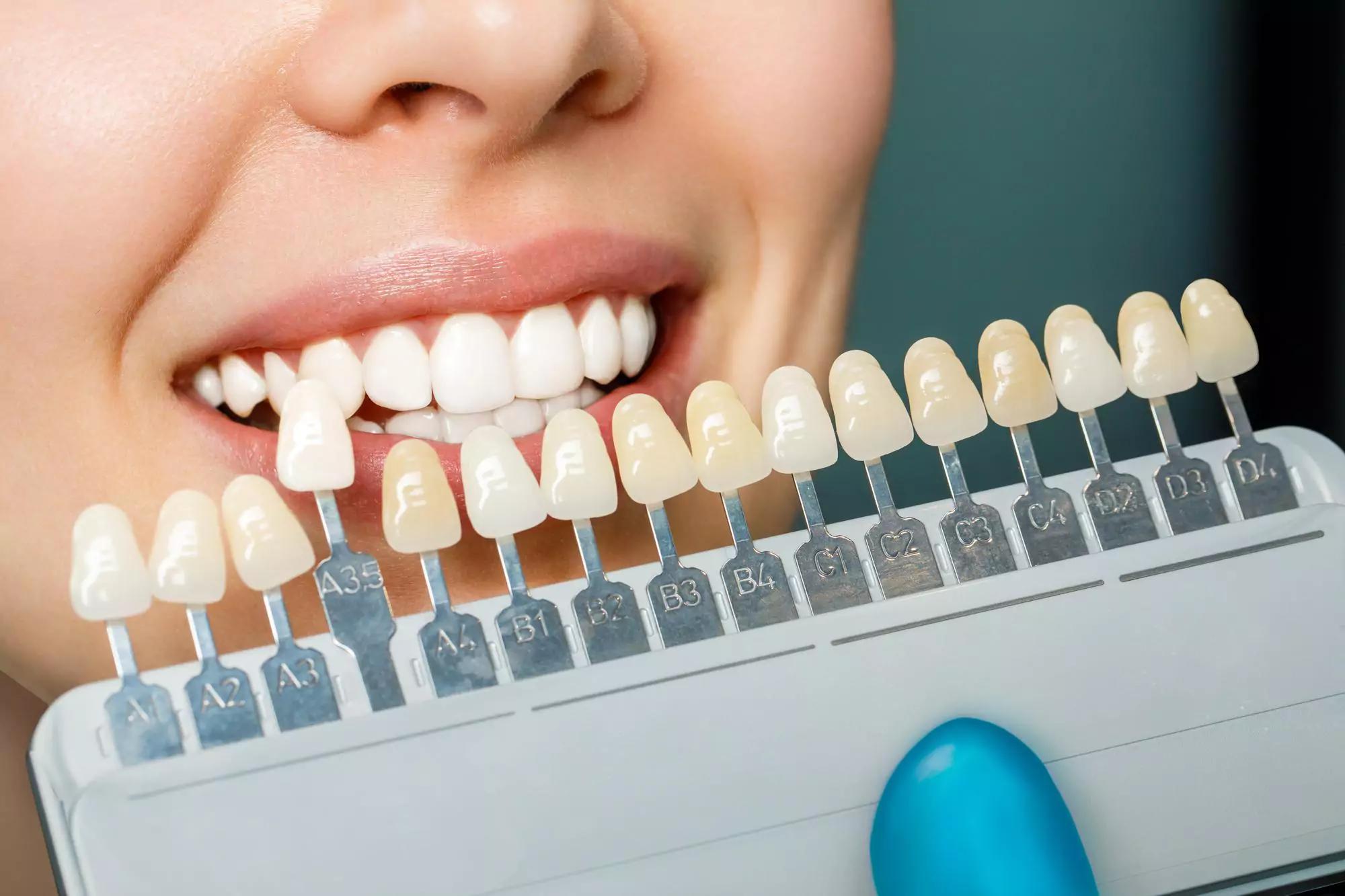
Your veneers are individually crafted by a dental laboratory to match your ideal shape, shade, and proportions. While they’re being created, your temporary veneers allow you to smile confidently and provide valuable feedback before the final placement.
Bonding Your Permanent Veneers
At your delivery appointment, we’ll carefully test each veneer for precise fit and appearance. Once approved, they’re permanently bonded using advanced dental adhesives, creating a seamless and durable finish.
Ongoing Maintenance
We’ll schedule follow-up visits to ensure everything feels comfortable and functions properly. Routine brushing, flossing, and professional cleanings help protect both your veneers and your natural teeth.
Conservative Porcelain Veneers Prep — Why It Matters
There’s a school of veneer dentistry that aggressively reduces tooth structure to make case logistics cleaner. That approach produces beautiful initial results, but it removes enamel that doesn’t grow back — a real downside, especially for older patients who may want options decades from now that aggressive prep would foreclose. We work the opposite direction. Our default is the minimum prep required for the case at hand.
Conservative prep is particularly meaningful for older patients with accumulated dental history. More original tooth structure stays intact, future replacements or repairs are easier, and the case is reversible to a meaningful degree if anything ever needs to change. The trade-off — conservative prep can’t correct as much as aggressive prep does — is usually fine for our typical Sandhills cases, which tend to be unifying existing accumulated work rather than fundamentally reshaping a young patient’s smile.
Caring for Your Porcelain Veneers — Long-Term
One of the advantages of porcelain veneers is that they require very little special maintenance. A consistent brushing and flossing routine, combined with regular dental checkups, is usually all that’s needed to keep both your veneers and your natural teeth healthy.
While the porcelain surface is highly resistant to discoloration, the teeth supporting your veneers are still susceptible to decay if plaque is allowed to build up. Maintaining excellent oral hygiene helps preserve both the appearance and health of your smile.
Patients who clench or grind their teeth may benefit from wearing a custom nightguard during sleep to reduce excessive pressure on their veneers. We also recommend avoiding habits such as chewing on pens, biting hard candy, or using your teeth to open containers. With these simple precautions, veneers can remain strong and attractive for many years.

Cost & Financing for Porcelain Veneer in Southern Pines
Porcelain veneers at our Southern Pines office run $1,000–$2,000 per tooth depending on case complexity. Single-tooth corrections at the lower end; multi-tooth smile-zone unification cases at the upper end. Lumineers fall in the same range — material choice driven by clinical fit, not budget. Every patient receives a written, itemized estimate at the consultation.
We accept most major dental insurance plans, including the Medicare Advantage dental plans common among Moore County retirees. However, pure cosmetic veneers are typically considered elective and aren’t covered by most plans, including Medicare and Medicare Advantage dental. Insurance may cover portions of treatment with functional components — a veneer replacing a failing crown, for example. Our front desk verifies your specific coverage before treatment. Sunbit monthly financing keeps payments manageable across larger cases.
Porcelain Veneers — Frequently Asked Questions
Am I too old for porcelain veneers?
No. We place veneers for patients in their seventies and eighties regularly. The underlying gum and tooth health matter more than age itself. Many of our most satisfied Sandhills patients have addressed cosmetic concerns they’ve thought about for decades.
How much do porcelain veneers cost in Southern Pines?
$1,000–$2,000 per tooth depending on case complexity. Full smile-zone cases typically run $6,000–$20,000. Written estimate at the consultation.
Can my old dental work be replaced with veneers?
Sometimes, depending on the underlying tooth structure. Failing crowns with healthy remaining tooth structure can often be replaced with more conservative veneers; failing crowns where the tooth structure is compromised typically need new crowns rather than veneers. We assess at the consultation.
Does Medicare cover veneers?
Traditional Medicare doesn’t cover dental at all. Medicare Advantage dental plans typically don’t cover cosmetic veneers — they’re elective. Sunbit financing covers payments across treatment.
How long do veneers last?
With reasonable care, well-placed porcelain veneers last 15 to 25 years. The porcelain itself doesn’t stain like natural enamel, but the underlying tooth structure still needs normal home care.
Will veneers damage my teeth?
Conservative-prep veneers require a very small amount of enamel reduction — a fraction of a millimeter. Lumineers often require no prep at all. We default to the minimum prep required for your case.
I only have one old veneer that needs replacing — do I need to redo all of them?
Often not. The most common situation is that the porcelain is fine but the surrounding natural teeth have changed. Sometimes the right answer is replacing only the failing veneer, sometimes adding selective bonding to adjacent teeth, sometimes targeted whitening of the natural teeth to unify the smile. Full redos are rarely necessary.
Are Lumineers the same as porcelain veneers?
Lumineers are a specific brand of ultra-thin porcelain veneer requiring little or no enamel prep. For candidates whose existing teeth need color or minor shape change, they’re an excellent option — especially relevant for older patients who want the most conservative possible approach.
Book Your Porcelain Veneers Consultation in Southern Pines
Ready to see what porcelain veneers could look like for your smile? Call (910) 839-0055 or request an appointment online. We serve Southern Pines, Pinehurst, Aberdeen, Whispering Pines, and surrounding areas.
Request More Information About Veneers in Southern Pines
Fill out this short form and a member of our Southern Pines team will contact you to answer your questions and help you schedule a veneers consultation.
Visit Us Today!
We look forward to meeting you. Call (910) 839-0055 or request an appointment online to set up your first visit. We’ll be in touch soon.
O2 Dental Group of Southern Pines
Monday:
Tuesday:
Wednesday:
Thursday:
Friday:
Saturday:
Sunday:
8:00am – 4:00pm
8:00am – 4:00pm
8:00am – 4:00pm
8:00am – 4:00pm
CLOSED
CLOSED
CLOSED
