
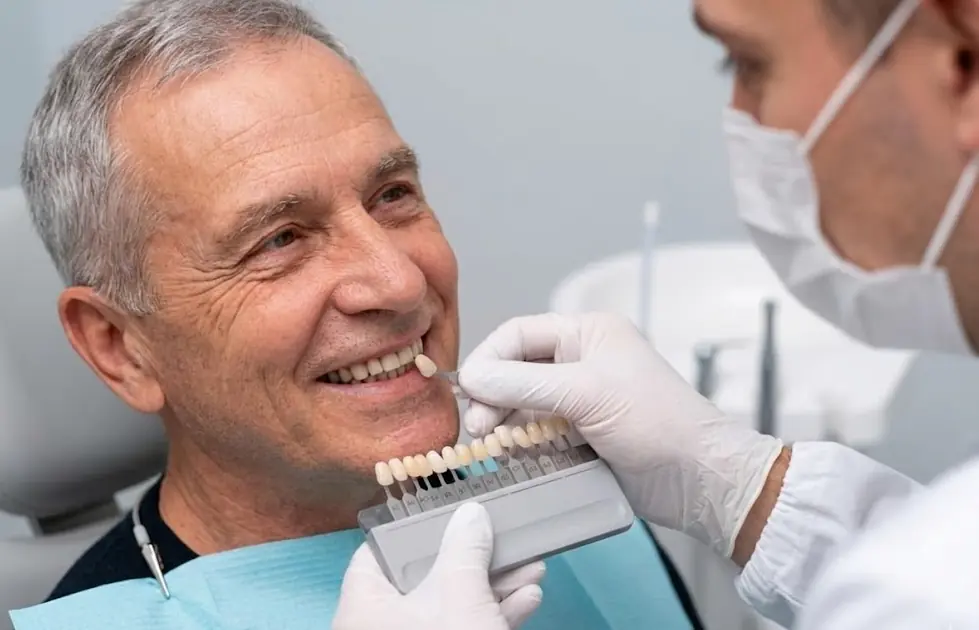
Losing a tooth — or several — affects more than how your smile looks. It changes how you chew, how you speak, how your remaining teeth shift over time, and how well the bone in your jaw holds its structure without the stimulation of a root to support it. The consequences compound quietly over years, which is why replacing missing teeth promptly and with the right solution matters more than most patients initially realize.
Of the tooth replacement options available today, endosteal dental implants are the closest thing dentistry has to replacing a tooth with something that actually functions like one. They are the most commonly placed type of implant for good reason: they are stable, durable, bone-preserving, and designed for the long term.
This guide explains what endosteal implants are, why they work the way they do, who qualifies, what the process involves, and how they compare honestly to bridges and dentures — so you can make an informed decision rather than a guessed one.
What’s in this guide
- What an endosteal implant is — and how it works
- Osseointegration: the biology that makes implants different
- The implant process, step by step
- Who is and isn’t a good candidate
- Implants vs. bridges vs. dentures: an honest comparison
- How long endosteal implants last
- FAQ: 12 common questions answered
What Is an Endosteal Implant?
The word “endosteal” means within the bone — which describes exactly how this implant works. Unlike a denture that rests on gum tissue, or a bridge that depends on adjacent teeth for support, an endosteal implant is placed directly into the jawbone and functions as an artificial tooth root.
According to the American Academy of Implant Dentistry (AAID), dental implants are the current gold standard for tooth replacement because they are the only restoration option that preserves natural bone and actually stimulates bone growth.
A complete implant restoration has three components, each with a distinct purpose:
The implant post
The portion placed surgically into the jawbone. Usually titanium — occasionally zirconia — and textured at the micro level to encourage bone integration. This is the foundation everything else builds on.
The abutment
A connector component that attaches to the post above the gum line and provides the interface for the final restoration. Selected for size and angle based on the specific case.
The restoration
The visible part — a crown for a single tooth, a bridge for multiple adjacent teeth, or a fixed or removable implant-supported denture for a full arch. Custom-fabricated to match your existing teeth in size, shape, and shade.
Why titanium?
Titanium is one of the few materials the body treats as biologically inert rather than foreign. Rather than encapsulating it in scar tissue, the bone grows into the micro-textured surface — creating a bond rather than a barrier. This property is the biological basis of the entire implant system.
Endosteal implants are sometimes contrasted with subperiosteal implants — a much older design that sat on top of the bone rather than inside it. Subperiosteal implants were once used for patients without adequate bone volume, but they are rarely placed today. Modern bone grafting techniques have improved to the point where most patients who formerly would have needed a subperiosteal approach can now receive endosteal implants after bone augmentation — with substantially better outcomes.
Osseointegration: The Biology That Makes Implants Different
Every other tooth replacement option — bridges, partial dentures, full dentures — sits on or anchors to existing structures. They rely on what’s already there. A dental implant, through osseointegration, actually becomes part of what’s there.
Osseointegration is the process by which the jawbone heals around and bonds to the implant surface. When a titanium implant is placed, the bone doesn’t treat it as an intrusion to wall off. Instead, bone cells migrate into the micro-textured surface of the implant and begin growing into it. Over weeks and months, the implant becomes structurally continuous with the surrounding bone — not mechanically attached, but biologically integrated. The implant and the jaw become one structure.a
This is not metaphor. The bond that results from successful osseointegration is strong enough that the implant cannot be removed without surgical intervention. That is the same level of integration as a natural tooth root.
Why osseointegration matters beyond stability: When a tooth is lost, the bone that once supported its root no longer receives stimulation during chewing. Without that signal, the body treats the bone as unnecessary and gradually resorbs it. This is why long-term denture wearers develop the sunken facial appearance associated with significant bone loss — the bone beneath the denture is slowly disappearing. An endosteal implant transmits chewing forces into the jawbone exactly as a natural root does, preserving bone volume and facial structure over time.
The clinical consequences of osseointegration are substantial:
- Stability that doesn’t degrade: The implant doesn’t loosen over time the way a denture fit does. The bone doesn’t change shape around it the way it does under a removable prosthesis.
- Bone preservation: Bone loss at the missing tooth site is significantly reduced compared to dentures or bridges, which provide no root stimulation.
- Load transfer: Biting forces are distributed into the jawbone rather than concentrating on gum tissue or adjacent teeth.
- Long-term durability: A well-integrated implant can remain functional for decades. The post itself, if properly maintained, is often described as potentially permanent.
The Implant Process — Step by Step
Many patients approach an implant consultation with some anxiety about what the process involves. The reality is usually less complex — and more comfortable — than they anticipated. Here is what the process actually looks like at O2 Dental Group.
Consultation and 3D imaging
The first appointment is an evaluation, not a procedure. We take a cone-beam 3D CT scan that gives us a complete picture of your bone volume, bone density, nerve canal positions, sinus floor location, and gum health — all in three dimensions. A 2D X-ray alone can’t tell us everything we need to know to plan an implant accurately. From this data, we build a precise treatment plan that identifies where the implant will be placed, what angulation is optimal, and whether any bone grafting is needed before placement.
Bone grafting (if needed)
If the 3D imaging reveals insufficient bone at the implant site — which is common when a tooth has been missing for a year or more — bone grafting can rebuild the area. The graft material (which may come from your own body, a donor, or a synthetic source) is placed at the deficient site and allowed to heal before implant placement proceeds. Socket preservation at the time of extraction can prevent this from being necessary for patients who act promptly after tooth loss.
Implant placement
The implant post is surgically placed into the jawbone under local anesthesia. Sedation options are available for patients who want additional comfort — oral conscious sedation and nitrous oxide are standard; IV sedation is available upon request. The procedure itself is typically shorter than patients expect. Post-operative discomfort is generally comparable to or less than that from a tooth extraction, and most patients manage it with over-the-counter pain medication for a few days.
Osseointegration — the healing phase
This is the longest phase of the process — typically 3 to 6 months — and also the most passive. The implant simply needs time to integrate with the bone. You continue your normal life during this period. In many cases, a temporary tooth option is provided so you’re not without a functional tooth while healing proceeds. We monitor your progress at regular check-in appointments.
Final restoration
Once osseointegration is confirmed, the final crown, bridge, or implant-supported denture is fabricated and attached. The restoration is custom-made — designed to match the surrounding teeth in size, shape, and color, and fit precisely against your bite. Final adjustments are made at delivery to ensure the result is both comfortable and correctly loaded.
Total timeline for most single-tooth cases: 4 to 6 months from first consultation to final crown, most of which is healing time rather than clinical appointments. More complex cases involving bone grafting or multiple implants take longer — the 3D consultation is the best way to get a specific timeline for your situation.
Who Is and Isn’t a Good Candidate
Endosteal implants are appropriate for a broad range of patients — but not without evaluation. Candidacy depends on several interconnected factors, and the only way to assess them accurately is through a proper clinical workup that includes 3D imaging.
You are likely a good candidate if you:
- Have one or more missing teeth — or teeth requiring extraction
- Have adequate jawbone volume, or are willing to pursue bone grafting if needed
- Have healthy gum tissue, or gum disease that has been treated and is stable
- Are in good general health without uncontrolled systemic disease
- Are a non-smoker, or committed to stopping during the healing period
- Are willing to maintain regular professional dental visits long-term
Situations requiring additional evaluation:
- Significant bone loss — bone grafting often makes implants possible; assess with 3D imaging before concluding they’re not an option
- Uncontrolled diabetes — controlled diabetes does not disqualify, but management affects healing
- Active smoker — increases risk substantially; cessation before and after surgery is strongly advised
- High-dose bisphosphonate medications — affects bone metabolism; requires specialist evaluation
- Active gum disease — must be treated and stable before implant placement
- Still growing — implants require a fully developed jaw; typically 18–20 years old minimum
What if I don’t have enough bone?
Bone loss at a missing tooth site is extremely common — the longer a tooth has been absent, the more the surrounding bone resorbs. This leads many patients to assume they’re simply not candidates for implants. That conclusion is often premature. Modern bone grafting techniques — socket preservation, ridge augmentation, and sinus lifts — can restore adequate bone volume at the implant site for many patients who initially appear to have insufficient bone. The 3D CT evaluation tells us definitively what’s there and what would be needed to proceed.
Does age matter?
There is no upper age limit for endosteal implants. Healthy patients in their 70s, 80s, and older successfully receive implants regularly. What matters is overall health, healing capacity, and bone support — not chronological age. There is an effective lower age limit: implants should not be placed until the jaw has finished growing, typically around age 18 to 20 depending on the individual.
What about smoking?
Smoking is the single most significant lifestyle factor affecting implant outcomes. It impairs blood flow and immune response in oral tissue, slowing the healing after placement and reducing the quality of osseointegration. Clinical studies consistently show higher implant failure rates in smokers. Patients who smoke can still be candidates, but they need to understand the elevated risk and the importance of cessation — ideally before surgery and for at least the duration of the healing phase.
Implants vs. Bridges vs. Dentures — An Honest Comparison
Bridges and dentures remain appropriate in specific circumstances. But for most patients with good bone and general health, endosteal implants offer better long-term outcomes across virtually every meaningful category. Here is the comparison without the marketing:
| Factor | Endosteal Implant | Dental Bridge | Removable Denture |
| Feels like natural teeth | Yes — fixed in bone | Mostly — fixed but on adjacent teeth | No — rests on gum tissue |
| Adjacent teeth affected | No — stands alone | Yes — healthy teeth ground down for crowns | Sometimes — clasps on remaining teeth |
| Bone preservation | Yes — stimulates bone like a root | No — bone continues resorbing at missing site | No — accelerates bone loss over time |
| Removable by patient | No — permanently fixed | No — permanently fixed | Yes — removed nightly |
| Adhesive required | No | No | Often yes |
| Chewing function | Excellent — full bite force | Good — limited by bridge span | Reduced — shifts under load |
| Longevity of restoration | Implant post: potentially lifetime; crown: 15+ years | 10–15 years typically | 5–10 years before significant adjustment or replacement |
| Long-term cost | Higher upfront; often lower over 20+ year horizon | Moderate upfront; replacement costs over time | Lowest upfront; progressive adjustment and replacement costs |
The upfront cost difference is real and worth acknowledging. Bridges cost less than implants at the outset — but they depend on crowning healthy adjacent teeth that otherwise wouldn’t need it, and they require replacement every 10 to 15 years. Dentures are the least expensive initially, but the progressive bone loss they permit leads to a worsening fit cycle that compounds in cost and complexity over time. For most patients evaluating options over a 20-year horizon, implants frequently compare favorably in total cost — not just in outcomes.
How Long Do Endosteal Implants Last?
The short answer is: the implant post is designed to be permanent, and in properly selected and maintained cases, it often is. Clinical studies tracking implants over 20 to 30 years show survival rates above 90% in well-maintained patients. The restoration attached to the implant — the crown, bridge, or denture — has a more limited lifespan, typically 10 to 15+ years before wear or other factors necessitate replacement.
What actually determines long-term implant success:
- Bone quality at placement — adequate volume and density support sustained integration
- Gum health maintained over time — peri-implantitis (gum disease around the implant) is the leading cause of late implant failure; prevented by professional maintenance and good home care
- Occlusal loading — implants that receive appropriate bite forces last longer than those subjected to excessive force from grinding or a poorly evaluated bite
- Smoking — patients who continue smoking after placement have significantly higher late failure rates
- Systemic health — conditions like uncontrolled diabetes impair the healing and tissue maintenance that keep implants healthy long-term
- Professional maintenance — semi-annual cleanings are not optional; they are the primary mechanism for catching early peri-implant issues before they progress to bone loss around the implant
The honest long-term picture: A well-placed implant with good bone support, in a patient who maintains regular professional care and doesn’t smoke, will typically outlast every alternative tooth replacement option by a significant margin. Implants that fail early usually do so because one of the above factors wasn’t adequately evaluated or managed before or during treatment — not because the implant itself failed arbitrarily.
Wondering whether you’re a candidate for dental implants?
A free consultation at O2 Dental Group includes a 3D bone evaluation, a review of your specific options, and a complete cost breakdown — before any commitment is made.
Schedule a Free Consultation Financing Options
Frequently Asked Questions — Endosteal Dental Implants
What exactly is an endosteal implant?
An endosteal implant is a dental implant placed directly into the jawbone. “Endosteal” means within the bone. The implant post — usually titanium — acts as an artificial tooth root. After the bone fuses to it through osseointegration, a crown, bridge, or implant-supported denture is attached via an abutment connector. Endosteal implants are the most commonly placed type of implant because they are stable, versatile, and consistently successful in properly selected patients.
What’s the difference between endosteal and subperiosteal implants?
Endosteal implants go into the jawbone and are the current standard of care. Subperiosteal implants sat on top of the bone beneath the gum and were used decades ago for patients without adequate bone. Subperiosteal implants are rarely placed today because improved bone grafting techniques allow most patients to receive endosteal implants instead — with substantially better long-term outcomes.
What is osseointegration and why does it matter?
Osseointegration is the process by which the jawbone heals around and bonds to the titanium implant surface — bone cells grow into the micro-textured implant, making it structurally continuous with the surrounding bone. This bond is what gives implants their stability, their bone-preserving function, and their longevity. No other tooth replacement option achieves this level of integration with the underlying bone.
Am I a candidate for endosteal implants?
Most adults with missing teeth are potential candidates. Key factors: adequate bone volume (or willingness to graft), healthy or treated gum tissue, good general health, and commitment to long-term maintenance. Smoking, uncontrolled diabetes, and active gum disease increase risk but are not automatic disqualifiers. Bone loss doesn’t automatically rule out implants — grafting often makes them possible. A 3D CT evaluation is the only accurate way to determine candidacy.
Do dental implants hurt?
Placement is done under local anesthesia — the area is completely numb during the procedure. Sedation options are available for additional comfort. Post-operative discomfort is typically comparable to or less than a tooth extraction and is managed well with over-the-counter pain medication for most patients. The experience is consistently described by patients as more manageable than they anticipated.
How long does the implant process take?
Most single-implant cases take 4 to 6 months from consultation to final crown — the majority of that is the healing phase, not appointments. Cases involving bone grafting add healing time before implant placement can proceed. Multiple implants or complex cases take longer. Your 3D consultation will produce a specific timeline for your situation.
What if I don’t have enough bone for an implant?
Bone loss at a missing tooth site is common — but it frequently doesn’t rule out implants. Bone grafting (socket preservation, ridge augmentation, or sinus lifts) can rebuild adequate bone volume in many cases. The 3D CT evaluation tells us definitively what’s present and what would be required. Don’t assume insufficient bone disqualifies you without a proper evaluation.
How long do endosteal implants last?
The titanium implant post is designed to be permanent and can last a lifetime with proper care. The attached crown or restoration typically lasts 10 to 15+ years before wear necessitates replacement. Long-term success depends on maintained gum health, appropriate bite loading, no smoking, managed systemic health, and consistent semi-annual professional maintenance.
Are dental implants better than a bridge or dentures?
For most patients with adequate bone and general health, yes — across virtually every relevant category. Implants preserve bone (bridges and dentures don’t), don’t require altering adjacent healthy teeth (bridges do), don’t shift or require adhesive (dentures do), and typically last longer. Upfront cost is higher, but the long-term value comparison often favors implants when replacement costs, progressive bone loss, and declining denture fit are accounted for.
Can dental implants fail?
Yes, though it’s uncommon — success rates in properly selected patients consistently exceed 95% in clinical literature. Failure most often results from early infection, failed osseointegration, heavy smoking, uncontrolled diabetes, or inadequate bone support. Late failure is most commonly caused by peri-implantitis (gum disease around the implant). Most risk factors are identifiable before treatment — which is why thorough pre-treatment evaluation matters.
Does smoking affect implant success?
Yes, significantly. Smoking impairs blood flow and immune response in oral tissue, slowing healing and reducing osseointegration quality. Clinical studies consistently show higher failure rates in smokers. Patients who smoke can still be candidates but face elevated risk. Cessation before and through the healing phase meaningfully improves outcomes.
Is there an age limit for dental implants?
No upper age limit — healthy patients in their 70s, 80s, and beyond can be excellent candidates. What matters is overall health and bone support, not age. There is an effective lower limit: implants should not be placed until jaw growth is complete, typically around age 18 to 20.
The Bottom Line
Endosteal implants have become the gold standard for tooth replacement not because of marketing but because of outcomes. The biological mechanism — osseointegration — produces a level of stability and bone preservation that no other tooth replacement option replicates. The clinical track record over several decades confirms it. And the long-term value, when measured against the full cost and consequence of the alternatives over 20 or more years, is compelling.
None of that means implants are right for every patient in every situation. They require adequate bone or the willingness to build it. They require a commitment to ongoing professional maintenance. They require honest assessment of factors like smoking and systemic health. What they don’t require is that you already know the answers to those questions — that’s what the evaluation is for.
If you’re considering implants and want to know specifically whether you’re a candidate and what treatment would involve, a consultation at O2 Dental Group is where that conversation starts.
O2 Dental Group provides dental implant treatment at all six North Carolina locations.
Raleigh · Durham · Fayetteville · Wilmington · Siler City · Southern Pines
Related Pages
- Dental Implants — Raleigh, NC
- Dental Implants — Durham, NC
- Dental Implants — Fayetteville, NC
- Dental Implants — Wilmington, NC
- Dental Implants — Siler City, NC
- Dental Implants — Southern Pines, NC
- Financing & Insurance
- More from the O2 Dental Group Blog
 Spanish