
Sleep Apnea & Snoring Help in Wilmington, NC
Sleep Apnea & Snoring Treatment in Wilmington, NC — The CPAP Alternative on Market Street
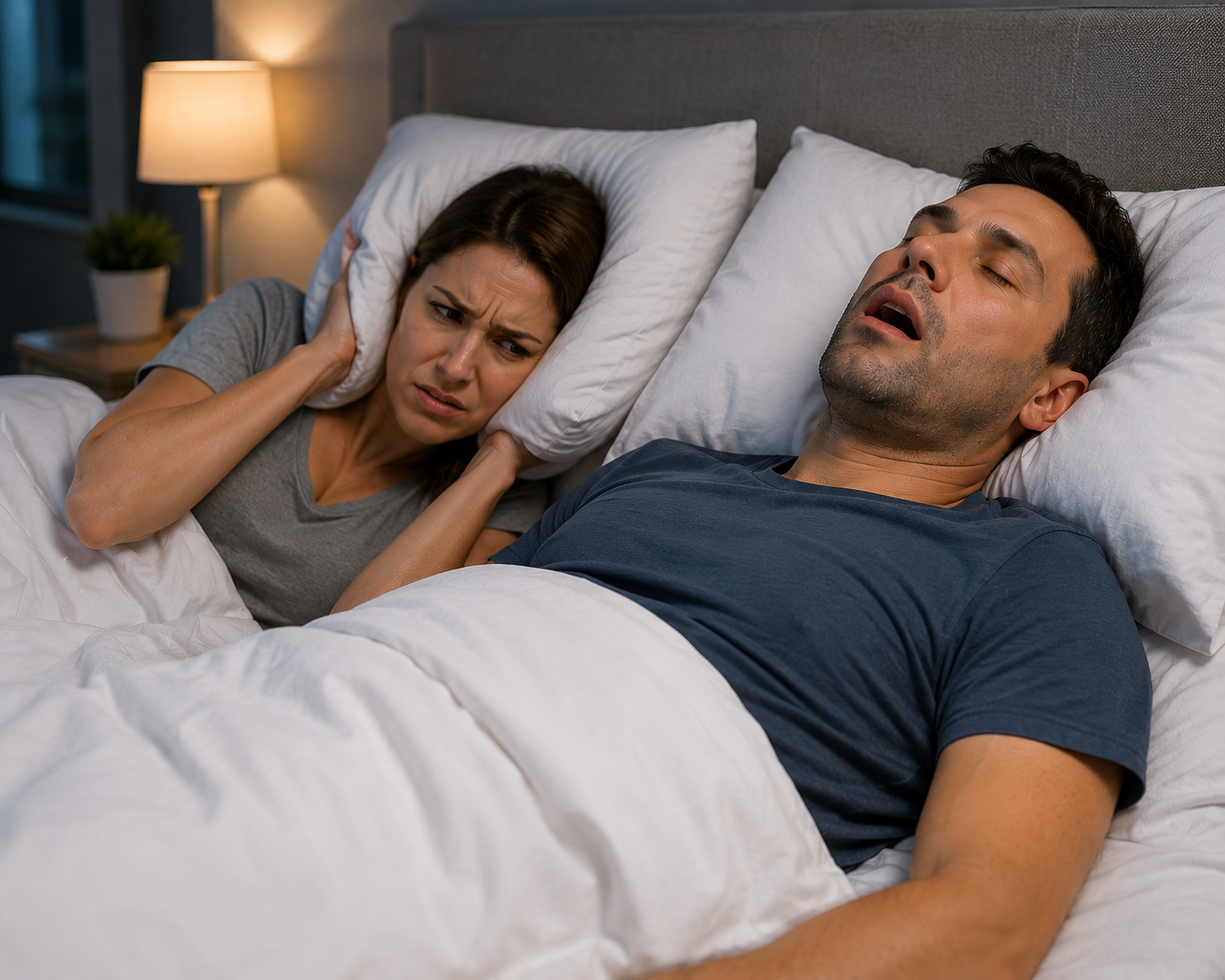
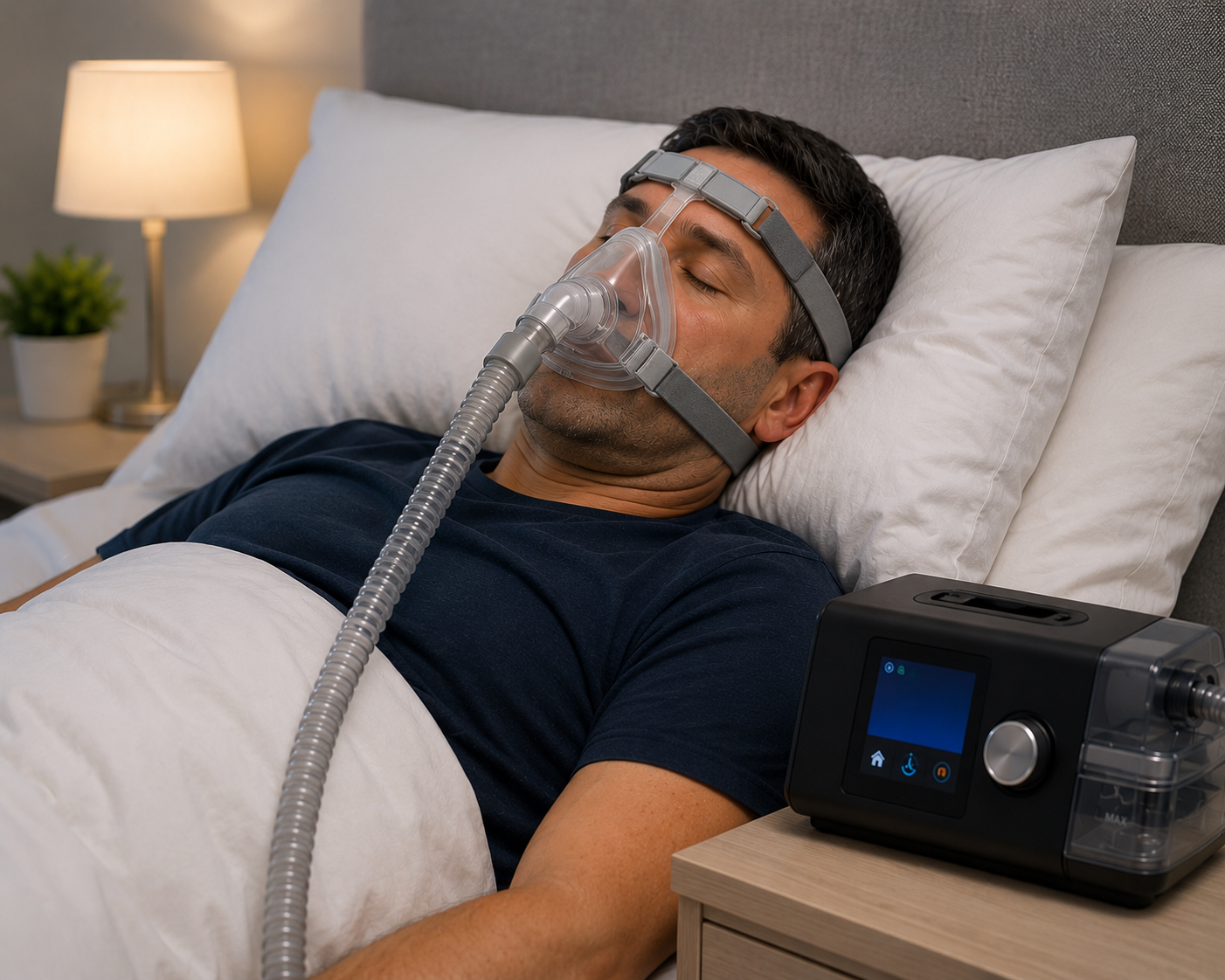
If you’ve tried CPAP and given up on it, you’re in the majority. Studies consistently show that more than half of patients prescribed CPAP either stop using it within a year or never adapt to it at all. The mask leaks, the noise disrupts your partner, the headgear hurts your face, the air pressure feels like sleeping in a wind tunnel. Sleep apnea doesn’t go away because you stopped wearing the machine. It just goes back to slowly damaging your cardiovascular system, your blood pressure, your daytime focus, and your relationship with whoever shares your bed.
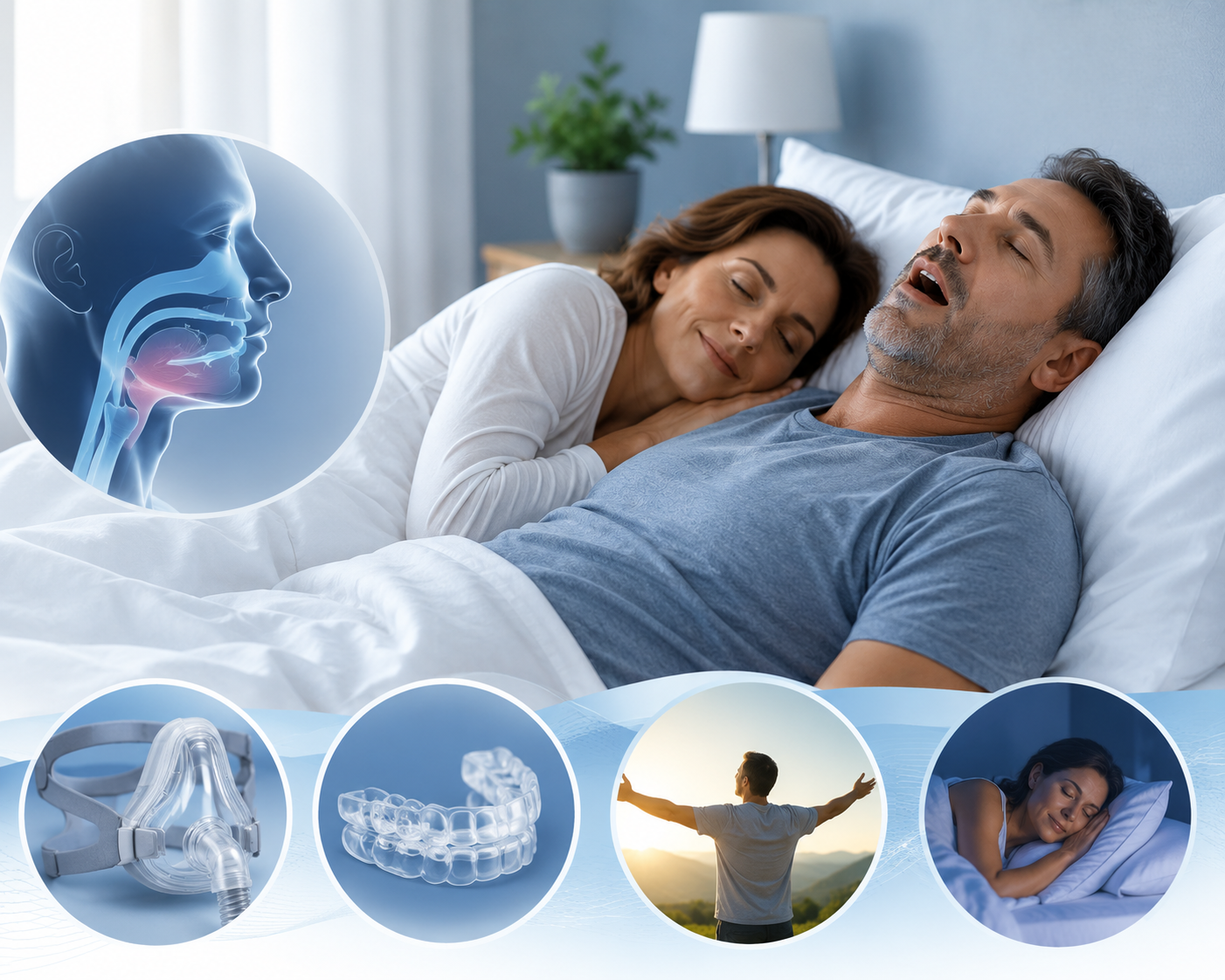
Custom oral appliance therapy is the FDA-approved alternative for patients who can’t tolerate CPAP, and for many patients with mild-to-moderate obstructive sleep apnea and severe snoring, it’s the first-line treatment that should have been recommended in the first place. At O2 Dental Group of Wilmington on Market Street in Ogden, we fabricate custom mandibular advancement devices — the gold standard category of oral appliance — from leading dental labs (SomnoMed, ProSomnus, Herbst, EMA). The appliance fits like a sports mouthguard. It holds your lower jaw forward just enough to keep the airway open while you sleep. No mask. No machine. No noise.
This page covers what sleep apnea is, why it matters for your long-term health, when an oral appliance is the right answer (and when CPAP genuinely is), what the treatment process involves, medical insurance billing, what to expect for cost, and the kinds of patients we see most often in Wilmington. The consultation is straightforward and you’ll leave with a clear answer about whether oral appliance therapy fits your situation.
Sleep Appliance
Learn how a custom oral sleep appliance can help manage obstructive sleep apnea and reduce snoring by gently repositioning your jaw to keep your airway open while you sleep. This video explains how the appliance works, its benefits, and what to expect during treatment.
Share with Patient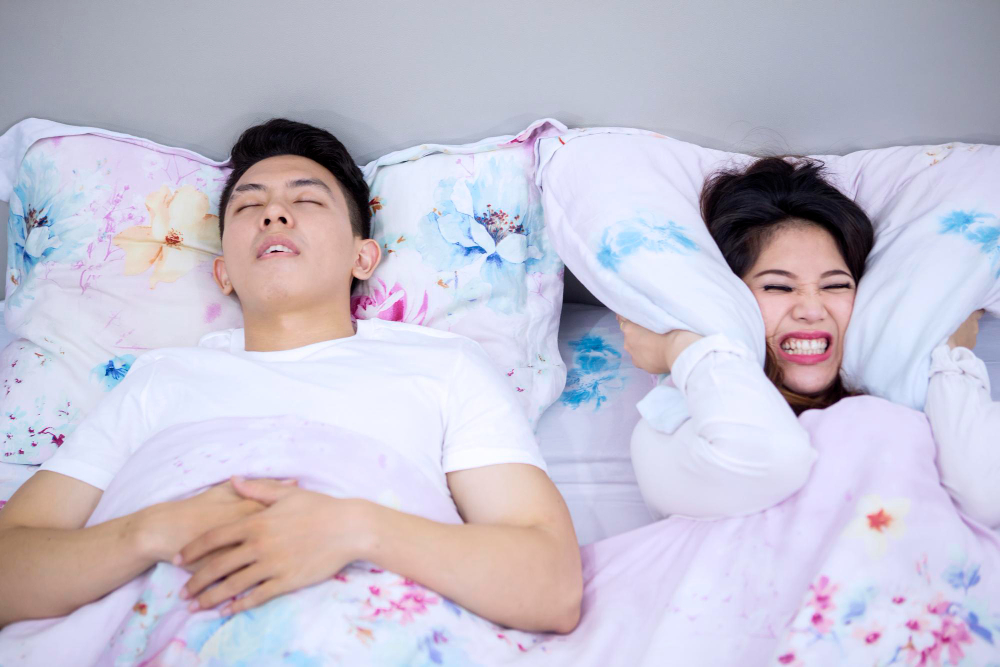
Why Sleep Apnea Treatment in Wilmington Matters
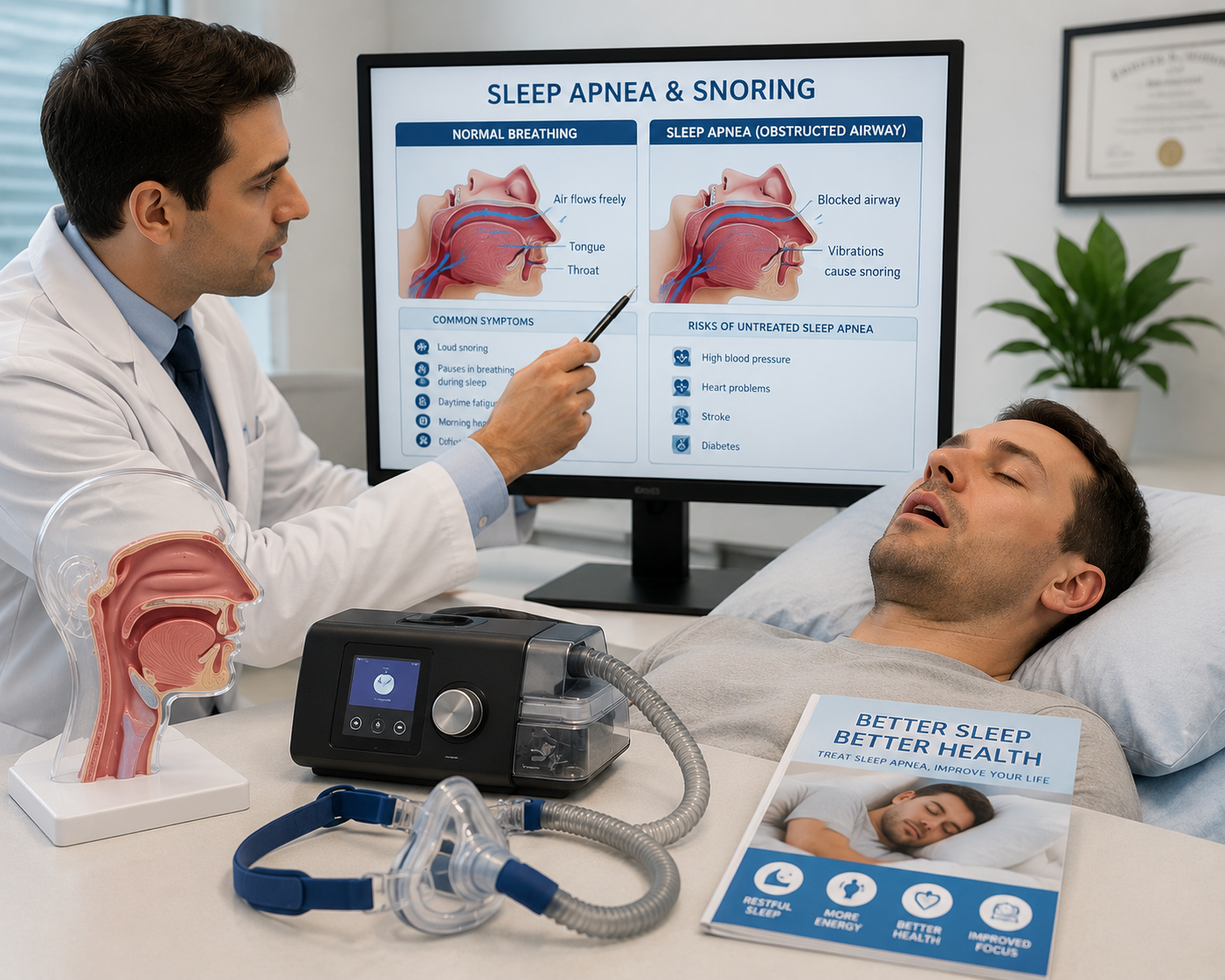
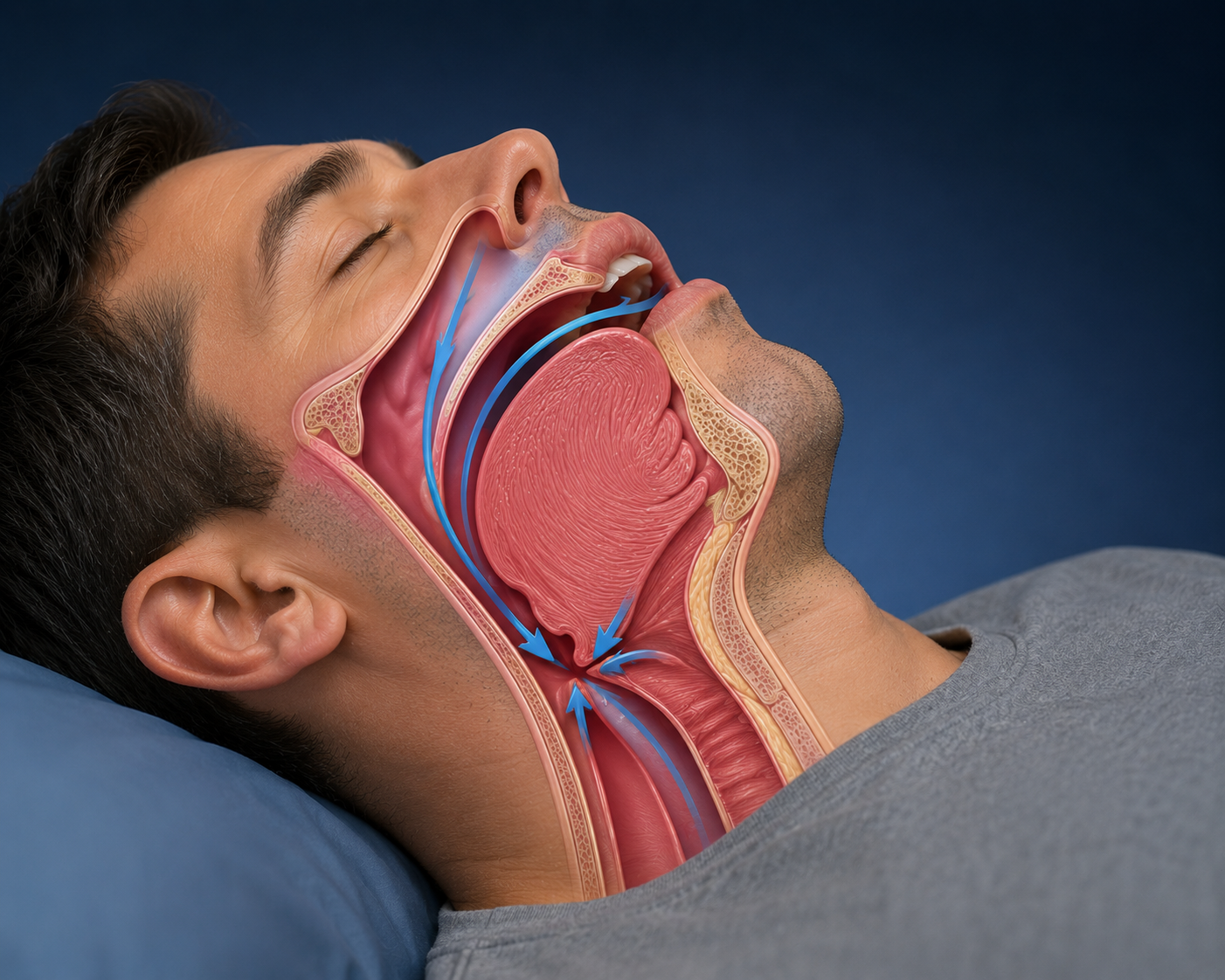
Obstructive sleep apnea is the brief, repeated stoppage of breathing during sleep — the airway collapses, oxygen drops, the brain partially wakes you to restart breathing, and the cycle repeats. Mild cases stop breathing five to fifteen times an hour. Severe cases stop more than thirty times an hour. Most patients don’t remember any of it. What they remember is feeling exhausted at 3 p.m. despite a full night in bed.
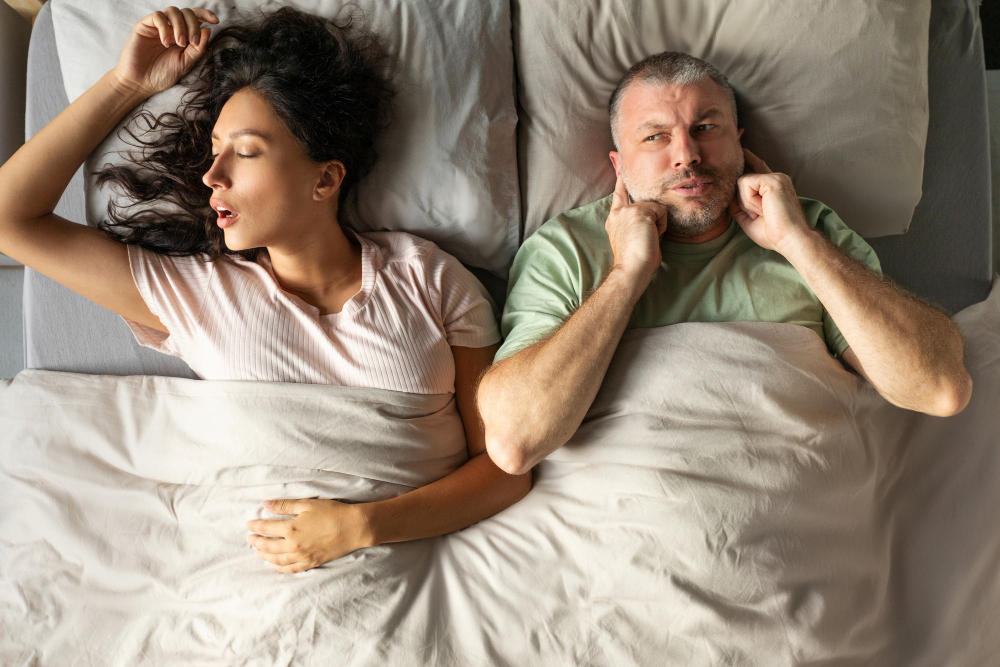
Untreated OSA is associated with significantly increased risk of high blood pressure, heart disease, stroke, type 2 diabetes, and motor vehicle accidents from drowsy driving. It also damages relationships — the partner of a heavy snorer often hasn’t slept well in years, which has its own downstream effects on mood, health, and the marriage itself. “Get your snoring checked out” is one of the most common low-stakes requests that turns out to be a high-stakes diagnosis.
Symptoms That Suggest You May Have Sleep Apnea
Sleep apnea is dramatically under-diagnosed because most of the symptoms happen while you’re unconscious. The strongest signal often comes from a partner. The patterns we watch for at the consultation:
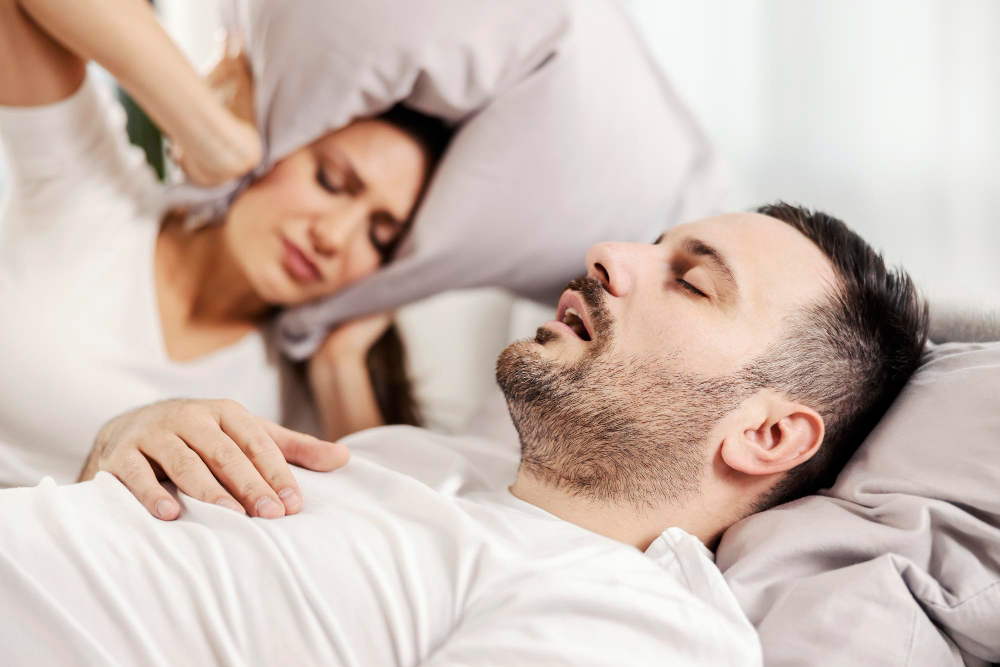
- Loud, persistent snoring — especially snoring loud enough to be heard from another room or to drive a partner to sleep elsewhere.
- Witnessed pauses in breathing — your partner has watched you stop breathing during sleep, sometimes followed by a gasping or choking restart.
- Daytime sleepiness despite full sleep hours — falling asleep at meetings, while reading, while driving, or feeling like you need a nap by mid-afternoon every day.
- Morning headaches — tension-type headaches in the temples or forehead within an hour of waking, often associated with overnight oxygen drops.
- Dry mouth or sore throat on waking — from mouth breathing during episodes of airway obstruction.
- Frequent nighttime urination — fragmented sleep and oxygen dips both trigger increased nocturnal urination — often misattributed to prostate issues in men.
- Difficulty concentrating, memory issues, or mood changes — cognitive effects of chronically poor sleep quality.
- High blood pressure that’s hard to control — untreated OSA contributes to hypertension that doesn’t respond fully to medication.

What an Oral Appliance Actually Is and How It Works
A custom oral appliance for sleep apnea is a precision-fitted device worn during sleep, designed to hold your lower jaw forward by a few millimeters. That position keeps the soft tissue at the back of your throat from collapsing onto your airway. The appliance looks roughly like two interlocking sports mouthguards — one for the upper teeth, one for the lower — connected by a mechanism that holds the jaw in the prescribed forward position.
The difference between a custom mandibular advancement device and the over-the-counter “stop snoring” mouthpieces sold online is significant. Over-the-counter devices are generic boil-and-bite plastic that doesn’t fit your specific dental anatomy. Custom devices are fabricated from impressions of your teeth and a precise bite registration in the prescribed jaw position. The fit is comfortable enough to wear all night, every night; the titration is precise enough to optimize your airway without unnecessary jaw advancement.
We use leading dental sleep medicine labs — SomnoMed, ProSomnus, Herbst, EMA, and others depending on the case. The brand we recommend depends on your specific anatomy, the severity of your apnea, your bite, and what you need the appliance to accomplish. Each has different mechanical advantages for different patient profiles, and we choose based on clinical fit rather than convenience.
Oral Appliances vs CPAP — Which Is Right for You
CPAP (continuous positive airway pressure) is still considered the gold standard treatment for severe obstructive sleep apnea. It works extremely well when patients can tolerate it. The problem is that a significant share of patients can’t — estimates range from 30% to over 50% non-adherence depending on the study. For those patients, oral appliance therapy is the FDA-recognized alternative, and the American Academy of Sleep Medicine endorses oral appliances as first-line treatment for patients with mild-to-moderate OSA, primary snoring, and severe OSA who can’t tolerate CPAP.
When CPAP is the right answer: severe OSA (AHI > 30), central sleep apnea (not obstructive), or any patient who can wear and tolerate the machine reliably. When an oral appliance is the right answer: mild-to-moderate OSA (AHI 5–30), severe primary snoring without OSA, CPAP intolerance or rejection, patients who travel frequently and find CPAP impractical, patients whose partners can’t sleep with CPAP noise, and patients who simply refuse to wear a machine on their face every night for the rest of their life. We don’t pretend the oral appliance is universally better. We recommend it for the patients it actually fits.
DOT and CDL Driver Sleep Apnea Compliance
Commercial driver’s license (CDL) holders with diagnosed obstructive sleep apnea are required by FMCSA regulations to be treated and demonstrate compliance to maintain their medical certification. Untreated OSA in a commercial driver isn’t just a health issue — it’s a livelihood issue. Drivers can lose their CDL during the DOT physical if untreated OSA is suspected or documented.
Custom oral appliance therapy is an FMCSA-recognized treatment for OSA in commercial drivers, with documented compliance equivalent to CPAP for medical-certification purposes. The advantage for drivers is significant: no machine to plug in at truck stops, no humidifier water to manage on the road, no power consumption, no maintenance routine. The appliance goes in a case, the case goes in the cab, and treatment continues regardless of where the load takes you. We work directly with DOT-certified medical examiners and provide the compliance documentation drivers need for their physicals.
Who Calls Us for Sleep Apnea Treatment in Wilmington
Our Wilmington sleep apnea patient base reflects the city itself. Working professionals from Mayfaire, Landfall, and Ogden whose partners have finally insisted on something being done about the snoring. Wrightsville Beach restaurant and hospitality workers whose shift schedules combined with untreated apnea have left them functioning on chronic exhaustion. Retirees from Porters Neck and Landfall who tried CPAP for six months and gave up. Younger patients in their thirties and forties who got a sleep study after a partner woke them gasping and were diagnosed with OSA earlier than expected. Long-haul truck drivers along the I-40 corridor who need DOT compliance documentation to keep their CDL.
A meaningful share of our patients arrive after a long stretch of CPAP frustration — they’ve had the machine for months or years, gave it an honest effort, and never adapted to it. They’re not lazy or non-compliant; CPAP genuinely doesn’t work for everyone, and the medical system often doesn’t do a good job of presenting alternatives. The oral appliance conversation is usually a relief: there’s a real, evidence-supported treatment they hadn’t been told about.
A Few Sleep Apnea & Snoring Cases We’ve Treated (Anonymized)
The Landfall executive whose marriage was on the line
Wife had been sleeping in the guest room for almost two years because the snoring was unbearable. Husband had been prescribed CPAP eighteen months earlier, used it for six weeks, abandoned it. He came in at his wife’s explicit request — her words: “fix this or we’re done.” Diagnosis was moderate OSA, AHI of 22. We coordinated a follow-up sleep study with the original sleep physician, billed his medical insurance, fabricated a SomnoMed appliance, and titrated the jaw position over six weeks. Follow-up sleep study six months later showed AHI dropped to 4. His wife moved back into the bedroom. He told us it was the best money his insurance had ever spent.
The Wrightsville Beach restaurant owner with chronic exhaustion
Worked split shifts, slept poorly for years, attributed everything to the schedule. Wife finally noticed he was stopping breathing for what seemed like long stretches. Home sleep test confirmed severe OSA, AHI of 38. CPAP was prescribed; he tried it for two months and couldn’t sleep with the mask. We were initially hesitant — oral appliances are typically first-line for mild-to-moderate OSA, not severe — but he was refusing CPAP entirely, and treating with an appliance was clearly better than treating with nothing. We documented the CPAP failure for medical insurance, fabricated a Herbst appliance, titrated carefully, and ordered a follow-up sleep study at four months. AHI dropped to 11 — mild-moderate range, a major improvement, and clinically acceptable for a patient who otherwise would have remained untreated. He sleeps. He works. He’s alive in conversations again.
The Leland long-haul trucker keeping his CDL
Diagnosed with OSA during a DOT physical, given thirty days to demonstrate treatment compliance or risk losing his certification. CPAP wasn’t practical for his on-the-road lifestyle (multi-week routes, no consistent power at truck stops, the machine itself was bulky). We expedited the consultation, fabricated a ProSomnus appliance, and provided the compliance documentation his DOT medical examiner needed within his thirty-day window. He kept his CDL. The annual recertification has been straightforward ever since.
Snoring Treatment Wilmington NC — Stop Snoring Solutions That Work
Snoring can do more than interrupt sleep — it can affect energy levels, relationships, and overall quality of life. Finding effective stop snoring solutions Wilmington NC residents can rely on starts with identifying the reason snoring happens in the first place, whether it’s airway restriction, sleep position, or underlying sleep-related breathing concerns. Addressing the cause instead of masking symptoms often leads to better long-term results and more restful nights.
Professional snoring treatment Wilmington NC patients choose often focuses on long-term improvement through personalized care rather than temporary fixes. Custom oral appliances are designed to help improve airflow, reduce nighttime disruptions, and provide a more comfortable alternative for patients looking for options beyond bulky equipment. With the right treatment approach, quieter sleep and better daytime energy become more achievable.
The Oral Appliance Process — Step by Step
Oral appliance therapy is a series of well-planned appointments over the course of a couple of months. Standard sequence:
- Initial consultation & screening: an hour-long visit. We discuss your sleep symptoms (snoring, daytime sleepiness, choking or gasping during sleep, morning headaches, partner observations), review any prior sleep study results, evaluate your airway, teeth, jaw position, and bite, and walk through whether oral appliance therapy is a fit. If you don’t have a sleep study and we suspect significant OSA, we’ll discuss coordinating one with a sleep physician before treatment.
- Sleep study (if needed): for diagnosed snoring without prior testing, or for patients whose symptoms suggest possible OSA, a home sleep test or in-lab study is the diagnostic gold standard. We don’t order or interpret sleep studies ourselves — that’s the sleep physician’s role — but we coordinate with local sleep specialists to make the referral and follow-up straightforward. Many patients can complete a home sleep test in one or two nights.
- Medical insurance verification: before fabrication, our team verifies your medical insurance benefits for oral appliance therapy. This is the step most dental offices skip. For diagnosed OSA, most major medical plans cover custom oral appliances as durable medical equipment (DME) with proper documentation — a recent sleep study, a physician’s prescription for oral appliance therapy, and CPAP intolerance documentation if applicable. We handle the authorization paperwork.
- Appliance design & fabrication: we take impressions or a digital scan of your teeth and bite registration at the position your appliance will hold your jaw. The records go to a dental lab that fabricates your custom mandibular advancement device. Total fabrication time is typically two to four weeks depending on the brand we’ve selected for your case (SomnoMed, ProSomnus, Herbst, EMA, or similar).
- Delivery & titration: we fit the finished appliance, verify comfort and bite, and walk through how to adjust the device over the first few weeks. Your jaw position is typically titrated forward slowly — in small increments — over the first 4–6 weeks to find the position that controls your symptoms with the least amount of mandibular advancement. This is the part most office workflows do poorly; we take time with it.
- Efficacy verification: for patients with diagnosed OSA, we recommend a follow-up sleep study after titration is complete to confirm the appliance is effectively reducing your AHI to clinically acceptable levels. For pure snoring patients without OSA, partner feedback and patient-reported symptom improvement are typically sufficient.
- Ongoing follow-up: annual check-ins to confirm fit, monitor bite changes, evaluate jaw joint health, and replace the appliance when wear or fit changes require it. Custom oral appliances typically last five to seven years with proper care.
Caring for Your Oral Appliance
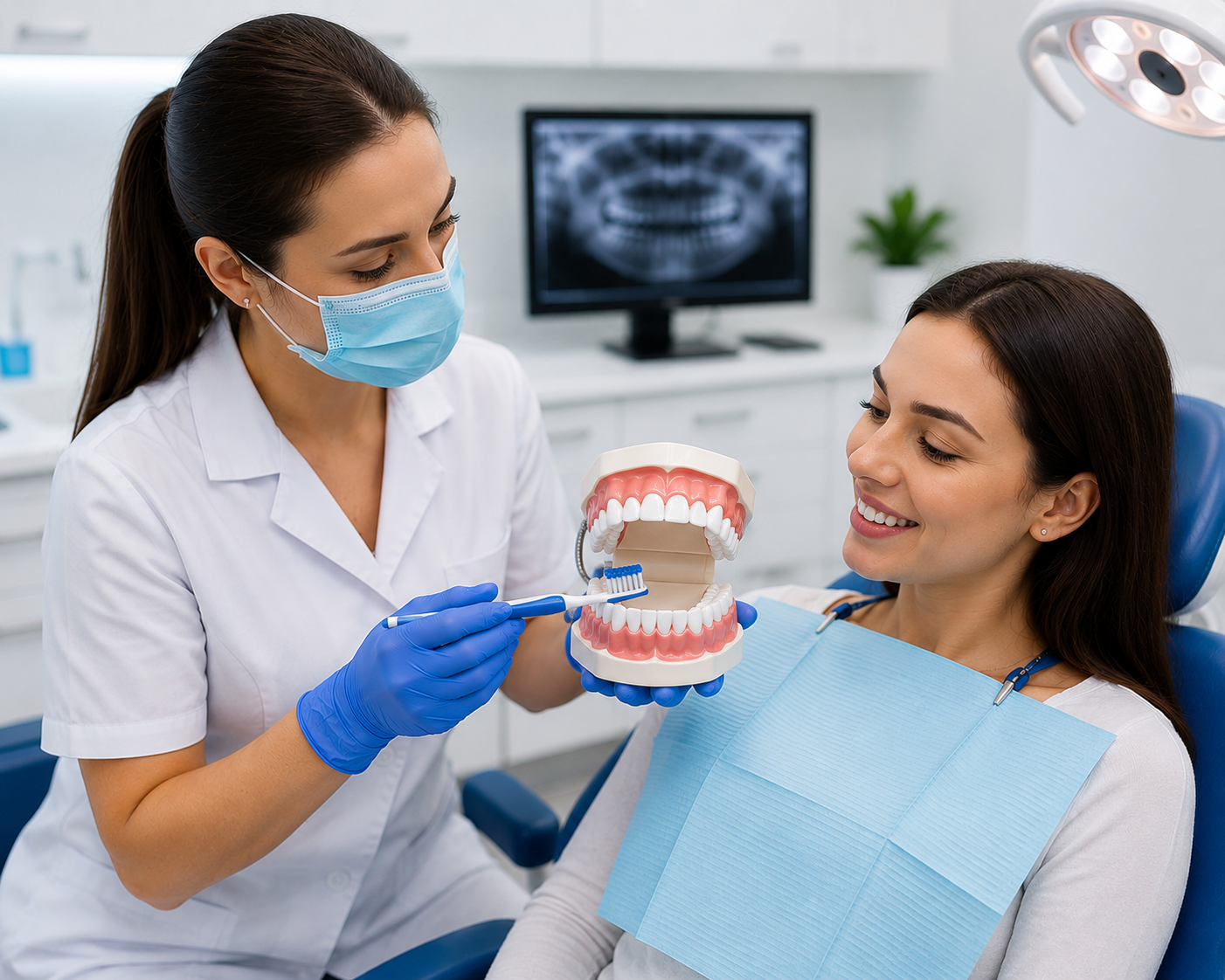
Oral appliance maintenance is straightforward. Rinse the appliance with cool water after each use, brush it gently with a soft toothbrush and mild non-abrasive cleaner (not regular toothpaste, which can scratch the surface), and store it in the case provided. Once a week, soak it in a denture-cleaning solution or in a specifically-designed appliance cleaner. Don’t use hot water — it can warp the material.
Two things matter for long-term success. First: wear it every night. Skipping nights or going without during travel undoes the airway training and lets symptoms return. Second: come in for the annual follow-up. Bite changes happen slowly with consistent oral appliance use — small but real, and worth monitoring. We adjust the appliance and check your jaw joint health each year to keep the treatment serving you for the full five-to-seven-year lifespan of the device.
Cost and Financing for Sleep Apnea & Snoring Treatment
Custom oral appliances at our Wilmington office run $1,500–$3,500 out of pocket depending on the specific appliance, your case complexity, and follow-up needs. The actual cost most patients pay is significantly less, because oral appliances are covered by most medical insurance plans as durable medical equipment for diagnosed obstructive sleep apnea. We bill medical insurance directly — not dental insurance — which is the part most dental offices either don’t do or do badly.
Coverage typically requires: a recent sleep study (within the last year for most plans) documenting OSA, a prescription for oral appliance therapy from a physician, and documentation of CPAP intolerance or failure if you’ve tried CPAP first. Our team handles the prior authorization paperwork. Most patients with traditional commercial insurance pay a copay or coinsurance amount in the range of $0–$500 for a custom appliance. Medicare also covers oral appliance therapy for diagnosed OSA with specific documentation requirements. For patients without medical insurance coverage, we offer Sunbit fin
Book Your Sleep Apnea Consultation in Wilmington
If snoring is affecting your sleep or your marriage, or if you’ve been diagnosed with sleep apnea and couldn’t tolerate CPAP, the consultation is the simple first step. We bill medical insurance, we coordinate sleep studies, and we have the experience to know when oral appliance therapy is the right answer and when CPAP genuinely is. Book online or call (910) 377-6453.
Request More Information (Wilmington)
Complete the form below and our team will contact you within 1 business day.
Sleep Apnea / Snoring in Wilmington – Frequently Asked Questions
Will my medical insurance cover an oral appliance?
Most major medical insurance plans cover custom oral appliances for diagnosed obstructive sleep apnea as durable medical equipment. We bill medical insurance directly. Coverage typically requires a recent sleep study, a prescription from a physician, and documentation of CPAP intolerance if applicable. Our team verifies your specific coverage and handles the prior authorization before fabrication.
Do I need a sleep study before getting an oral appliance?
For diagnosed OSA, yes — a sleep study is required by both clinical best practice and most insurance plans. For pure snoring without other symptoms, a sleep study is recommended but not strictly required at our office. We’ll tell you honestly at the consultation whether testing is needed for your specific situation, and we coordinate with local sleep physicians if so.
How much does a custom oral appliance cost in Wilmington?
$1,500–$3,500 out of pocket without insurance coverage. With medical insurance coverage for diagnosed OSA, most patients pay a copay or coinsurance amount in the range of $0–$500. We verify your specific coverage before treatment so there are no surprises.
I have CPAP but can’t tolerate it — can I switch to an oral appliance?
Often yes. CPAP intolerance is a documented medical indication for oral appliance therapy and is recognized for insurance coverage. We work with your sleep physician to document the CPAP failure, fabricate a custom appliance, and verify efficacy with a follow-up sleep study after titration.
Are oral appliances as effective as CPAP?
For mild-to-moderate obstructive sleep apnea, oral appliances are recognized by the American Academy of Sleep Medicine as first-line treatment with effectiveness comparable to CPAP in real-world adherence-adjusted outcomes — because the appliance gets worn every night and CPAP often doesn’t. For severe OSA, CPAP remains the gold standard when tolerated; oral appliances are second-line for severe OSA patients who can’t use CPAP.
Can an oral appliance help with snoring even if I don’t have OSA?
Yes. Custom oral appliances are effective for severe primary snoring without OSA. The mechanism is the same: holding the jaw forward to prevent the soft tissue from vibrating against the airway. Pure snoring treatment isn’t typically covered by medical insurance (no underlying OSA diagnosis), so out-of-pocket cost applies.
I’m a CDL driver — will an oral appliance satisfy my DOT compliance?
Yes. The FMCSA recognizes oral appliance therapy as a valid treatment for OSA in commercial drivers, with documented compliance equivalent to CPAP for medical certification purposes. We provide the compliance documentation your DOT-certified medical examiner needs for your annual physical. Many CDL drivers prefer oral appliances over CPAP because they’re portable, require no power, and don’t depend on truck-stop accommodations.
How long does treatment take from consultation to fully fitted appliance?
Typically six to ten weeks total. Initial consultation, sleep study coordination if needed, medical insurance verification, impressions, lab fabrication (2–4 weeks), delivery and titration (4–6 weeks). The titration phase is the part most offices rush; we don’t.
Schedule Today!
We look forward to meeting you. Call (910) 377-6453 or request an appointment online to set up your first visit. We’ll be in touch soon.
O2 Dental Group of Wilmington
Monday:
Tuesday:
Wednesday:
Thursday:
Friday:
Saturday:
Sunday:
8:00am – 6:00pm
8:00am – 6:00pm
8:00am – 6:00pm
8:00am – 6:00pm
CLOSED
CLOSED
CLOSED
