
Tooth Extraction Wilmington, NC
Tooth Extractions in Wilmington, NC — Wisdom Teeth, Surgical, and Site Preservation on Market Street
When a tooth can’t be saved — advanced decay, severe fracture, infection that won’t resolve with a root canal, or wisdom teeth causing crowding or recurrent infections — extraction is the right answer. Modern tooth extraction is a far more comfortable procedure than the reputation suggests, particularly when done by a dentist with significant surgical experience and the right equipment to handle complications when they arise.
If severe tooth pain, a broken tooth, or another urgent dental problem is what brought you here, visit our Wilmington emergency dentistry page for current emergency appointment information and office hours.
At O2 Dental Group of Wilmington on Market Street in Ogden, we handle the full range of extractions in-house: simple extractions of erupted teeth, surgical extractions of teeth requiring sectioning or bone removal, and wisdom teeth removal including impacted cases. Dr. Olu has more than 15 years of oral surgical experience, which means most extractions that other general dental offices refer to oral surgeons are handled directly at our office. Same dentist, same chair, same continuity of care.
We also routinely offer same-visit bone grafting when tooth extractions are likely to be followed by an implant — preserving the bone at the extraction site dramatically improves the success and aesthetics of future implant placement. This page covers when extractions are necessary, the difference between simple and surgical procedures, what to expect, the case for site preservation grafting, and the recovery process.
Simple Extraction
Learn what happens during a simple tooth extraction and why it may be recommended when a tooth cannot be repaired. This video explains the procedure, how the tooth is gently removed, what you can expect during recovery, and tips to help promote comfortable healing afterward.
Share with PatientWhen Tooth Extraction Is Necessary
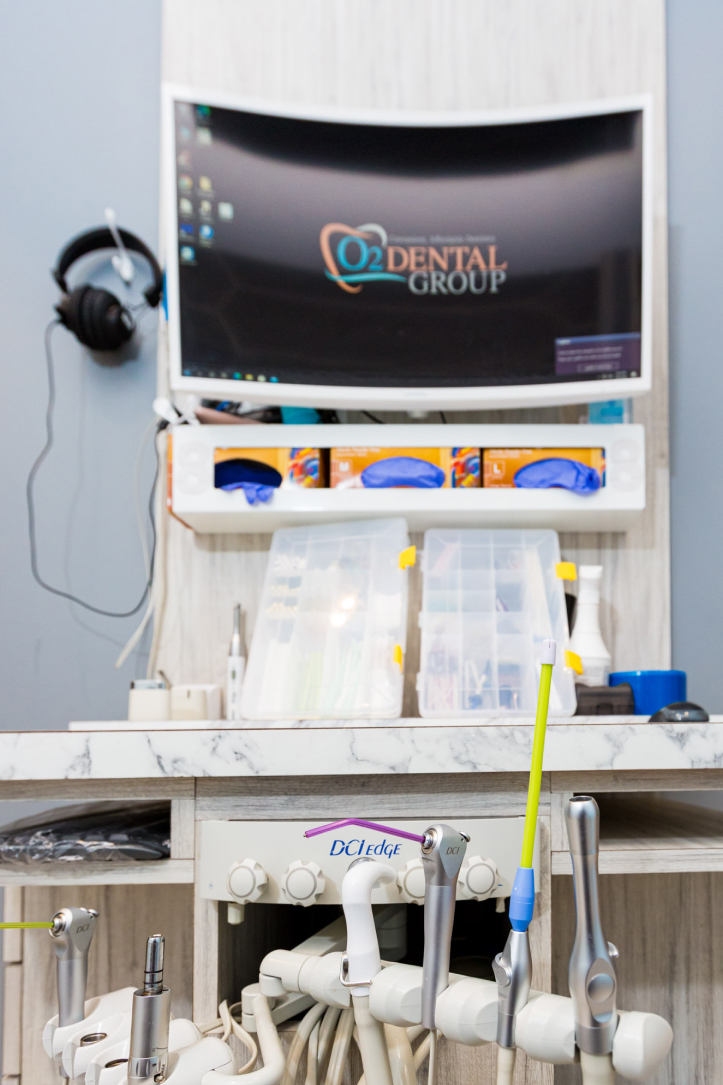
We default to saving teeth when possible — root canals, crowns, bonding, and other restorations preserve natural teeth in ways that no replacement can fully match. But when a tooth can’t be saved, prolonged attempts to salvage it cause more problems than the extraction itself. The patterns where extraction is the right answer:
- Severely decayed teeth beyond restoration — decay that has progressed deep into the tooth structure with insufficient remaining material to support a filling, crown, or root canal restoration.
- Severely fractured teeth — vertical fractures running below the gumline, multiple-direction fractures, or large pieces broken off in ways that don’t support restoration.
- Failed root canal treatment — endodontic retreatment fails in roughly 5% of cases. When retreatment isn’t viable, extraction and replacement is the next step.
- Severe periodontal (gum) disease — advanced periodontal bone loss can leave a tooth without adequate support. Even if the tooth itself is intact, the loss of surrounding bone may make extraction the right answer.
- Wisdom teeth causing problems — impacted wisdom teeth, recurrent infections (pericoronitis), pressure on adjacent teeth, or cyst formation around the wisdom tooth crown are all extraction indications.
- Orthodontic indications — occasionally, extractions are necessary to create space for orthodontic correction of severe crowding. We coordinate with your orthodontist when this applies.
- Pre-prosthetic preparation — patients transitioning to full or partial dentures sometimes need final remaining compromised teeth removed to allow proper denture fit.
Simple vs Surgical Tooth Extractions
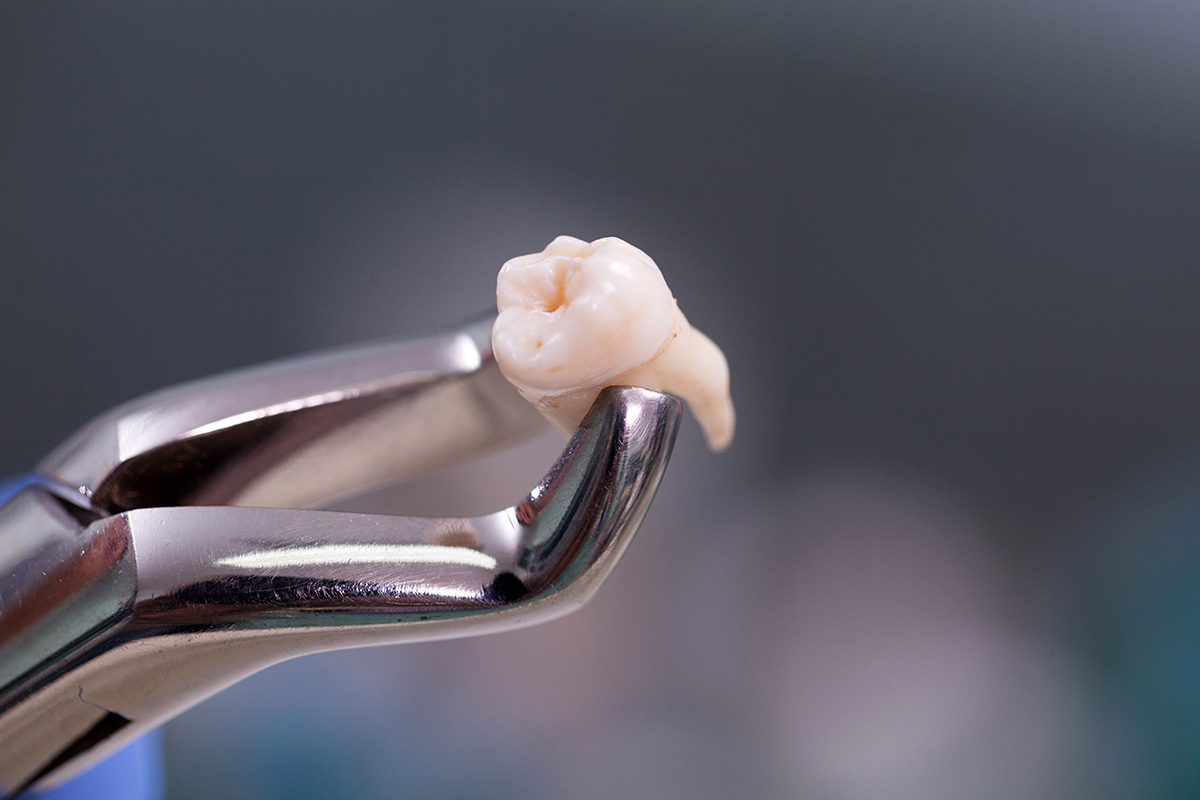
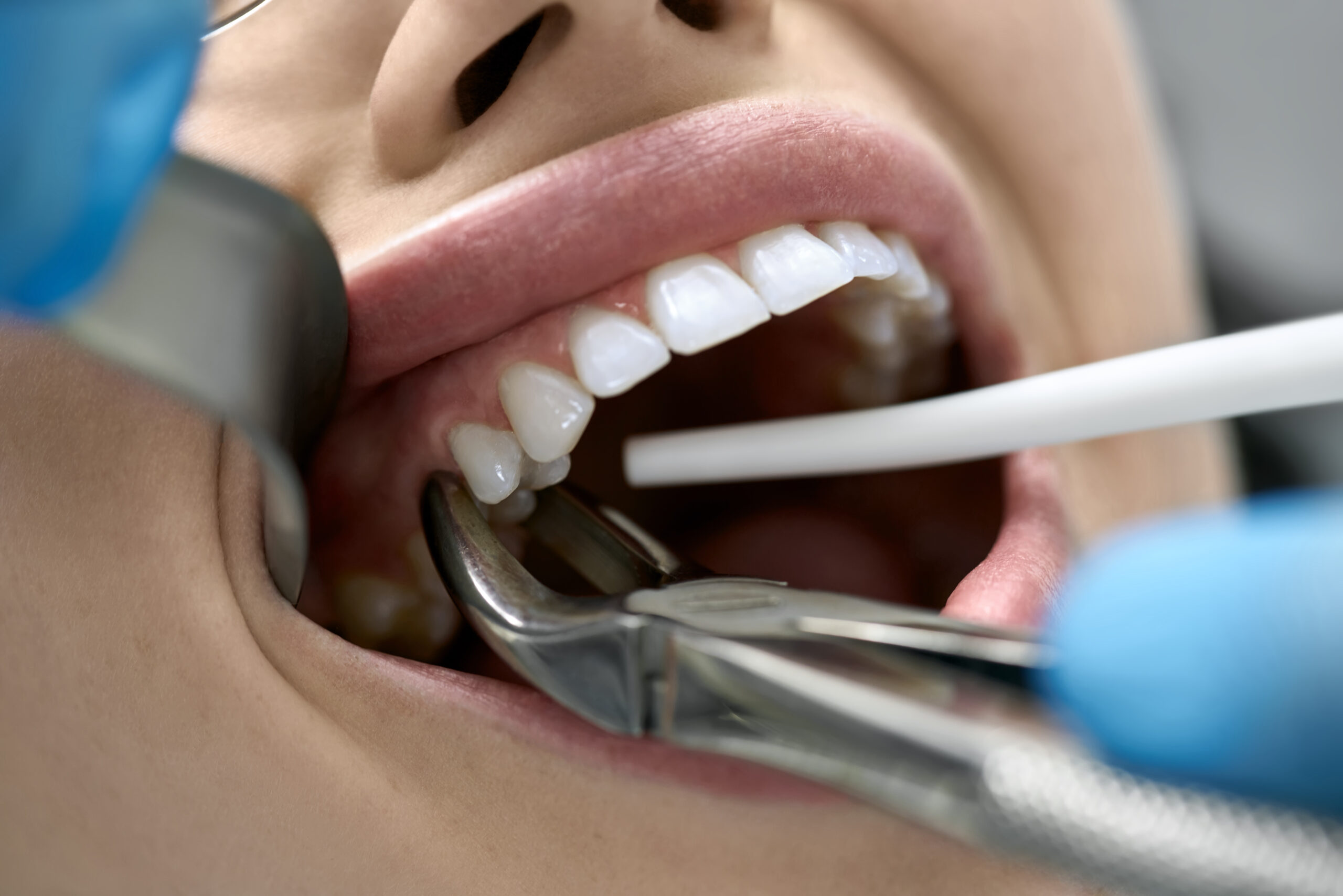
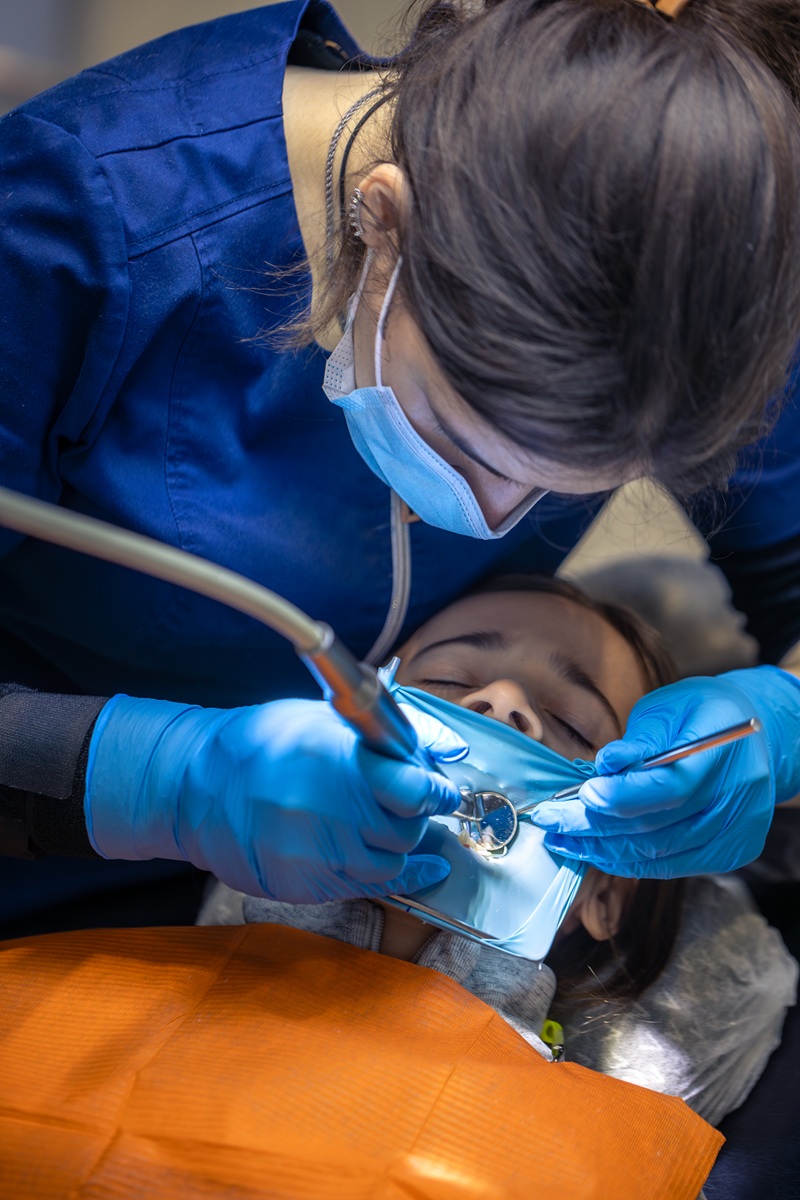
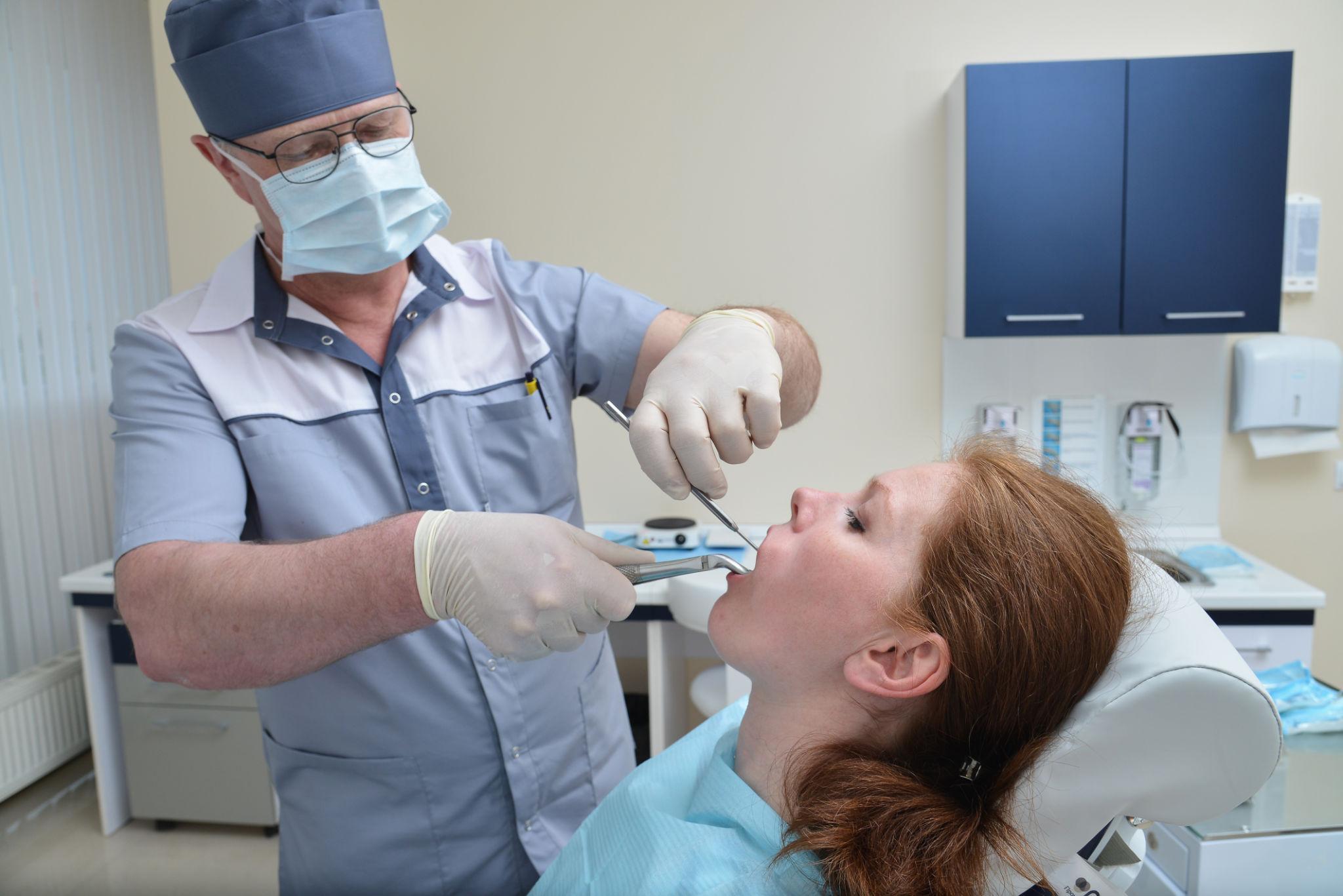
Simple extractions remove teeth that are fully erupted and accessible. The dentist uses specialized instruments to gently loosen the tooth from its socket and lift it out. Local anesthesia, typically 15–30 minutes from start to finish, minimal recovery time. Most adult extractions of erupted teeth fall into this category.
Surgical extractions are needed when a tooth requires sectioning (cutting the tooth into pieces for easier removal), when there’s a need to make a small incision in the gum tissue to access the tooth, when bone needs to be removed around the tooth, or when the tooth is impacted (partially or fully buried beneath the gum or bone surface — most common with wisdom teeth). Surgical extractions take longer (typically 30–60 minutes), require more involved technique, and have somewhat longer recovery periods than simple extractions.
Dr. Olu handles both categories in-house at the Wilmington office. The decision about which technique applies happens at the consultation based on 3D CBCT imaging when needed. Patients are not routinely referred to oral surgeons for extractions at this office — the surgical experience is in-house.
Same-Visit Bone Grafting for Implant Site Preservation
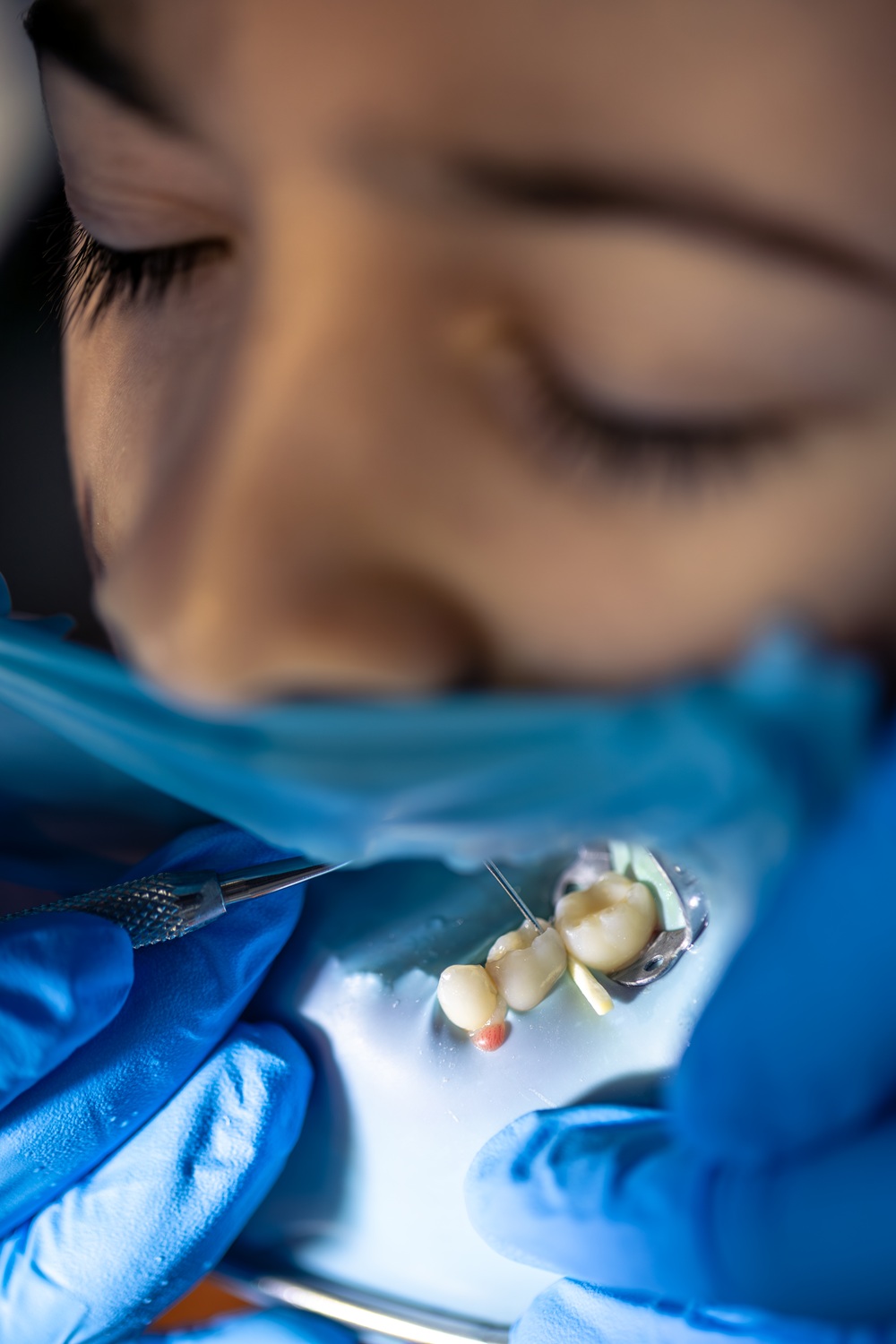
When a tooth is extracted, the bone that previously supported the tooth begins to resorb (shrink) within weeks. Without a root or implant stimulating the bone to maintain itself, the body absorbs the unused bone over months and years. For patients planning future implants in the extraction site, this matters significantly — implant placement requires adequate bone volume, and a resorbed site may require additional grafting later or may not support the implant the patient wants.
Same-visit bone grafting addresses this directly. After the tooth is removed, we pack the empty socket with bone grafting material (either synthetic or processed allograft) before closing the site. The graft preserves the bone volume during the healing period and provides a foundation for implant placement weeks or months later. For any patient considering an implant in the extraction site — even if the implant is years away — the small additional cost of socket preservation grafting is almost always worth it.
We routinely recommend site preservation grafting for extractions in the visible smile zone, in posterior teeth that may need future implant replacement, and in any case where the patient is uncertain about their long-term replacement plans. The decision is yours; the honest analysis is ours.
Tooth Extraction Recovery and Aftercare
Recovery from simple extractions is typically uneventful. Mild discomfort for 24–48 hours, manageable with over-the-counter pain medication. Soft food for a couple of days, avoid rinsing or spitting forcefully for the first 24 hours (we want a stable blood clot in the socket), no straws for the first few days. Most patients return to work the next day if they were unable the same day.
Surgical extractions and wisdom teeth removal have somewhat longer recovery periods. We send patients home with detailed written instructions, prescription pain medication if appropriate, and a follow-up visit scheduled at one week to check healing. Swelling peaks at 48–72 hours and resolves over the following days. Bruising occasionally appears in the cheek area for wisdom teeth removal — normal and resolves on its own. We answer aftercare questions by phone any time during the recovery period.
A Few Tooth Extraction Cases We’ve Seen in Wilmington (Anonymized)
The Ogden patient with all four impacted wisdom teeth
Twenty-two-year-old with all four wisdom teeth impacted — two partially erupted with recurrent infections, two fully buried beneath the bone. We did 3D CBCT imaging at the consultation to map the relationship between the wisdom teeth and the surrounding nerve canals, planned the surgical approach, and removed all four in a single 90-minute session under local anesthesia with mild sedation. Recovery took about four days for him to be back to normal. He was relieved to do it in one visit at his regular dental office rather than being referred to an oral surgeon he’d never met.
The Mayfaire patient with a failing root-canal-treated molar
Upper-first molar that had been root-canal-treated and crowned eight years earlier. Recent X-ray showed persistent infection at the root tip despite the previous endodontic work. We discussed retreatment versus extraction; given the underlying root anatomy and the patient’s interest in eventually placing an implant, extraction with same-visit bone grafting was the cleaner long-term path. Did the extraction and graft in one 45-minute visit; six months later placed the implant in the well-preserved bone; six months after that delivered the final crown. Total elapsed time from extraction to fully restored tooth: about 13 months. The site preservation graft was critical — without it, the implant placement would have needed additional grafting and added another six months.
The Wrightsville Beach surfer with a fractured front tooth from a board accident
Upper-front tooth fractured vertically below the gumline after a board accident. The fracture pattern meant the tooth couldn’t be saved — vertical root fractures don’t support restoration. Emergency visit on a Saturday morning, extraction with same-visit bone grafting and an immediate flipper (a removable temporary tooth) so he wasn’t walking around with a visible gap. Six months later, implant placement in the preserved bone; three months after that, the permanent crown. The site preservation was particularly important for the front-tooth aesthetics — without the graft, the gumline would have collapsed and the final implant crown would have been visibly recessed.
Cost of Tooth Extractions in Wilmington
Simple extractions at our Wilmington office run $200–$400 per tooth. Surgical extractions run $300–$800 per tooth depending on complexity. Wisdom teeth removal runs $200–$600 per tooth for erupted wisdom teeth, $400–$1,200 per tooth for impacted wisdom teeth. Same-visit bone grafting for site preservation typically adds $400–$800 to the extraction cost.
Most dental insurance plans cover extractions as basic or major procedures depending on the specific tooth and complexity. Coverage for bone grafting varies. We verify your specific coverage before treatment. For uninsured patients, the O2 Advantage Plan offers discounted rates, and Sunbit financing covers larger cases like four-wisdom-tooth removal or complex surgical extractions.
Tooth Extraction FAQs — Frequently Asked Questions
Do you do wisdom teeth extractions at this office?
Yes — Dr. Olu handles wisdom teeth extractions in-house at the Wilmington office, including impacted cases that other general dental offices typically refer to oral surgeons. With 15+ years of surgical experience, most cases stay in-house. The decision is made at the consultation based on 3D CBCT imaging when needed.
How much does tooth extraction cost in Wilmington?
Simple extractions run $200–$400 per tooth. Surgical extractions run $300–$800. Wisdom teeth removal runs $200–$600 for erupted wisdom teeth, $400–$1,200 for impacted ones. Same-visit bone grafting adds $400–$800 when included.
Does an extraction hurt?
With modern local anesthesia, the procedure itself doesn’t hurt — you feel pressure but not pain. Some mild discomfort during recovery (typically 24–48 hours) is normal and responds to over-the-counter pain medication. Surgical extractions and wisdom teeth removal involve somewhat more recovery discomfort, which we manage with prescription pain medication when appropriate.
What is bone grafting and do I need it after extraction?
Bone grafting is the placement of bone material in the empty socket after extraction to preserve the bone volume during healing. It’s important for any patient planning a future implant in that site — without grafting, the bone resorbs (shrinks) over months and can make implant placement more difficult or impossible later. We recommend it for any extraction in the smile zone or any case where implant replacement is a real future possibility.
How long does the recovery take?
Simple extractions: mild discomfort for 24–48 hours, mostly back to normal in 2–3 days. Surgical extractions and wisdom teeth removal: more discomfort and swelling for 3–5 days, fully resolved over the following 1–2 weeks. We schedule a follow-up at one week for surgical cases.
Can I drive home after an extraction?
After simple extractions with local anesthesia only, yes — most patients drive themselves. After surgical extractions or wisdom teeth removal involving sedation, you’ll need a driver. We tell you at the consultation based on your specific case what to plan for.
What’s the alternative to extraction?
Depending on the case, alternatives may include root canal treatment to save an infected tooth, crown placement to restore a damaged tooth, or other restorative procedures. We default to saving teeth when possible. Extraction is recommended only when the tooth can’t be reliably restored or when removal is needed for orthodontic or pre-prosthetic reasons.
When should wisdom teeth be removed?
Generally in the late teens to early twenties before the roots are fully developed, when the teeth are causing or likely to cause problems (recurrent infections, crowding pressure, cysts, decay due to inaccessibility for cleaning). Not every wisdom tooth needs removal — fully erupted, functional, and accessible-for-cleaning wisdom teeth can stay. The 3D CBCT consultation tells us which category yours fall into.
book your Tooth Extraction Consultation in Wilmington
Extractions — simple, surgical, or wisdom teeth — are handled in-house at our Wilmington office by a dentist with significant surgical experience. Same-visit bone grafting when implants are in your future. Real continuity of care from extraction through replacement. Book online or call (910) 377-6453.
Schedule Today!
We look forward to meeting you. Call (910) 377-6453 or request an appointment online to set up your first visit. We’ll be in touch soon.
O2 Dental Group of Wilmington
Monday:
Tuesday:
Wednesday:
Thursday:
Friday:
Saturday:
Sunday:
8:00am – 6:00pm
8:00am – 6:00pm
8:00am – 6:00pm
8:00am – 6:00pm
CLOSED
CLOSED
CLOSED
