
Root Canal Treatment in North Carolina
Few procedures carry a heavier reputation than the root canal — and few deserve it less today. The dread is a holdover from older techniques and from teeth left untreated until they were severely infected. Modern endodontics is a controlled, well-numbed procedure that does one valuable thing: it ends the pain and keeps a tooth you would otherwise lose. O2 Dental Group performs root canals in-house at all six of our North Carolina offices, molars included, so your treatment stays with the team that already knows your mouth. This page explains what a root canal is, the signs you may need one, how we approach urgent cases, what it costs, and where to find the office nearest you.
Root Canal
Learn how root canal therapy removes infected or inflamed tissue from inside a tooth to eliminate pain and save your natural tooth. This video explains why root canals are needed, what happens during treatment, and how restoring the tooth afterward helps protect it for long-term function.
Share with PatientWhat a Root Canal Is
Inside each tooth sits the pulp — living tissue of nerves and blood vessels. When bacteria reach it through deep decay, a crack, or a tooth that’s been restored many times, the pulp becomes inflamed and, trapped inside solid tooth, it cannot heal. The result is escalating pain and, eventually, infection that reaches the bone surrounding the root. A root canal takes out the inflamed pulp, disinfects and reshapes the canals threading the roots, and closes them with a biocompatible filler, gutta-percha. The tooth loses its nerve but keeps its structure and place in the jaw, and it can function for decades.

Signs You May Need One
- Persistent toothache — a deep ache that lingers, commonly stronger after you lie down or while chewing.
- Lingering temperature sensitivity — heat or cold whose sting outlasts the drink or bite by a wide margin.
- A gum swelling that may drain — on-and-off discharge that signals infection at the base of the root.
- A lone tooth shading gray — frequently following an earlier injury, marking a nerve that’s no longer alive.
- A much-restored tooth — repeated fillings or an aging crown that have at last inflamed the pulp.
What we don’t do: “same-day emergency root canals.” Some practices advertise them; we don’t, because forcing a root canal through active infection tends to undercut the result. A dependable outcome wants the tooth fully numb, the infection settled, and enough working time. So every O2 office handles the pain on your first visit — drainage, antibiotics for infection, pain relief — and books the root canal for the right window, generally a few days later. You leave comfortable, and the tooth is treated properly.
What to Expect
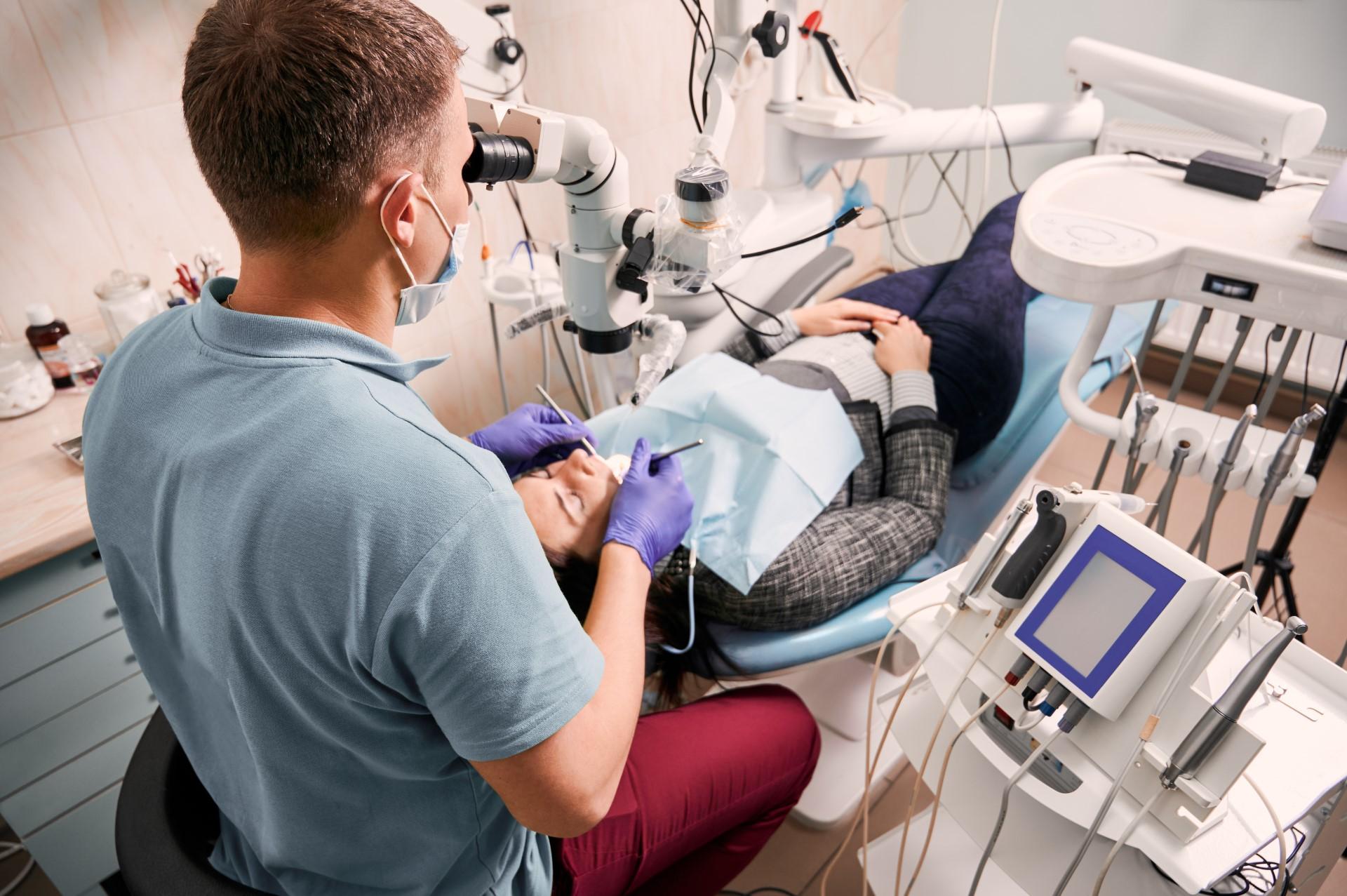
A root canal takes one to two visits of about 60 to 90 minutes. The tooth is numbed completely, isolated with a rubber dam, and accessed through a small opening; we remove the infected pulp, clean and shape the canals, irrigate, and seal them with gutta-percha. Front teeth and bicuspids are usually one visit; molars, with more canals, can take two. Because a treated tooth turns brittle, it then needs a crown to protect it from fracture — and at our Durham, Fayetteville, and Southern Pines offices, that crown can often be made and placed the same day with CEREC. Most patients feel markedly better right away, with a day or two of mild soreness that over-the-counter medication handles.
Cost and Insurance
Group-wide, a root canal ranges from $800 to $1,800 by tooth and canal count, and the protective crown that follows adds roughly $1,200 to $2,000. Dental insurance generally treats the procedure as major restorative care, covering near half once the deductible is met, though crown coverage varies. Every office confirms your specific benefits up front so the numbers are real before you commit. For the patient share, the O2 Advantage Plan, with CareCredit and Sunbit, brings reduced rates and monthly payment options.
Find Root Canal Treatment at an O2 Dental Group Near You
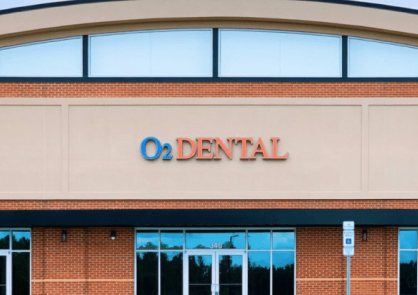
Root canal treatment is available at all six of our North Carolina offices. Choose the one closest to you for hours, directions, and online booking:


Root Canal – Frequently Asked Questions
What does a root canal cost?
$800 to $1,800 for the procedure, plus $1,200 to $2,000 for the protective crown. Insurance generally covers the canal near half as major restorative care; every office verifies up front.
Is it painful?
About like a routine filling — fully numbed, and easier afterward than before.
Why skip same-day emergency root canals?
Forcing one mid-infection undercuts the result. The pain is handled that day; the canal itself follows a few days later.
Is a crown needed afterward?
Nearly always — it guards the brittle treated tooth. Same-day CEREC crowns are available in Durham, Fayetteville, and Southern Pines.
What else could I do instead?
Extraction, followed by an implant or bridge and bone loss over time. Keeping the tooth is usually the better path.
Book a root canal Consultation
If a tooth has hurt for more than a few days, don’t wait — call the office nearest you, or request an appointment online:
- Raleigh — (919) 341-4160
- Durham — (919) 813-2267
- Fayetteville — (910) 484-5141
- Wilmington — (910) 377-6453
- Siler City — (984) 265-1655
- Southern Pines — (910) 839-0055
Schedule Today!
We look forward to meeting you. Call us or request an appointment online to set up your first visit. We’ll be in touch soon.
